

Australia
Australia Segment Summary
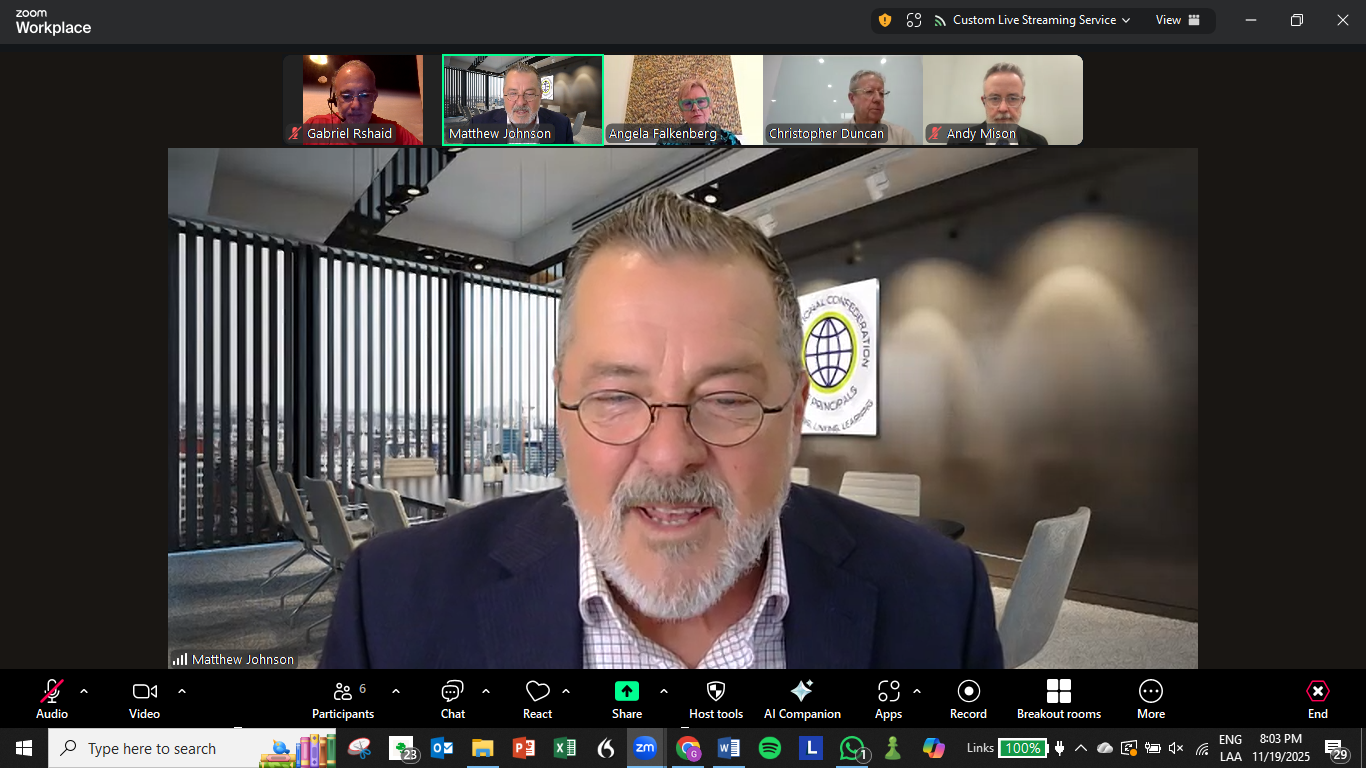
Opening & Framing: Matt Johnson begins with an Acknowledgment of Country (Dharug/Duraban land near Sydney).
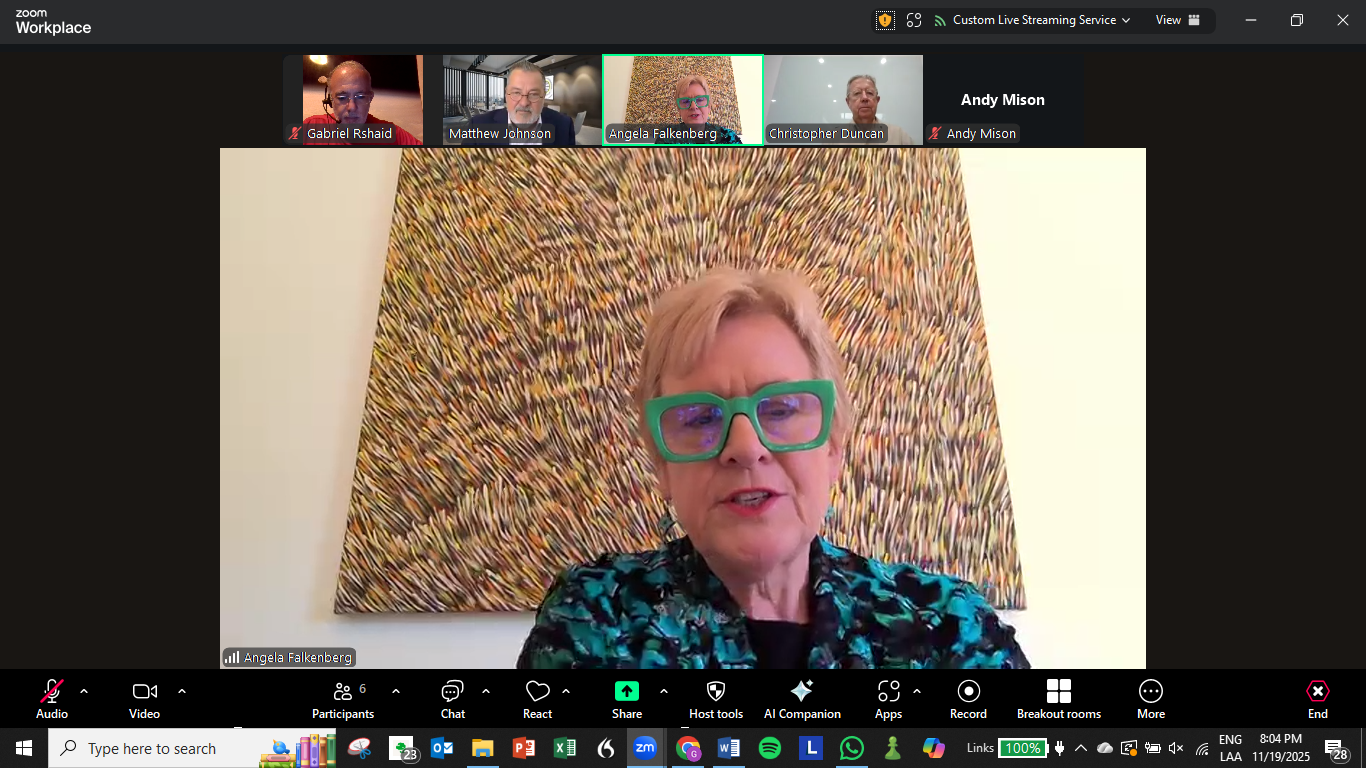
Angela Falkenberg – Australian Primary Principals Association (APPA)
Angela (from Adelaide, South Australia) introduces APPA and its core belief: when primary leaders are trusted, supported and genuinely heard, children, staff and communities thrive.
Start Well, Learn Well campaign (2026)
A national campaign to highlight how primary schools build belonging, identity and community, and hold families through both “ordinary days and extraordinary times”. Primary schools nurture curiosity, connection and confidence – the foundation for all further learning.
Goodwill and role creep
Much of schools’ impact is powered by goodwill from principals, staff and communities going far beyond job descriptions. But schools are increasingly being asked to host or deliver non-education services.
Humanity at the core & OECD “Education for Human Flourishing”
Angela references OECD’s work on education for human flourishing – young people need more than knowledge: they need meaning, purpose and capabilities like adaptive problem-solving and ethical judgment.
In the age of AI, technology should enhance human potential, not replace humans: AI and data matter only when paired with empathy and human judgment.
Principals’ wellbeing and policy message
- APPA argues workload, trust, role clarity and system coherence should be treated as essentials, not optional extras.
- They have commissioned world-first research on how threats/violence against school leaders reduce their effectiveness.
- “Back to basics” is not enough; children deserve more than a “basic education”. Primary education must be seen as a cornerstone, not just a stepping stone.
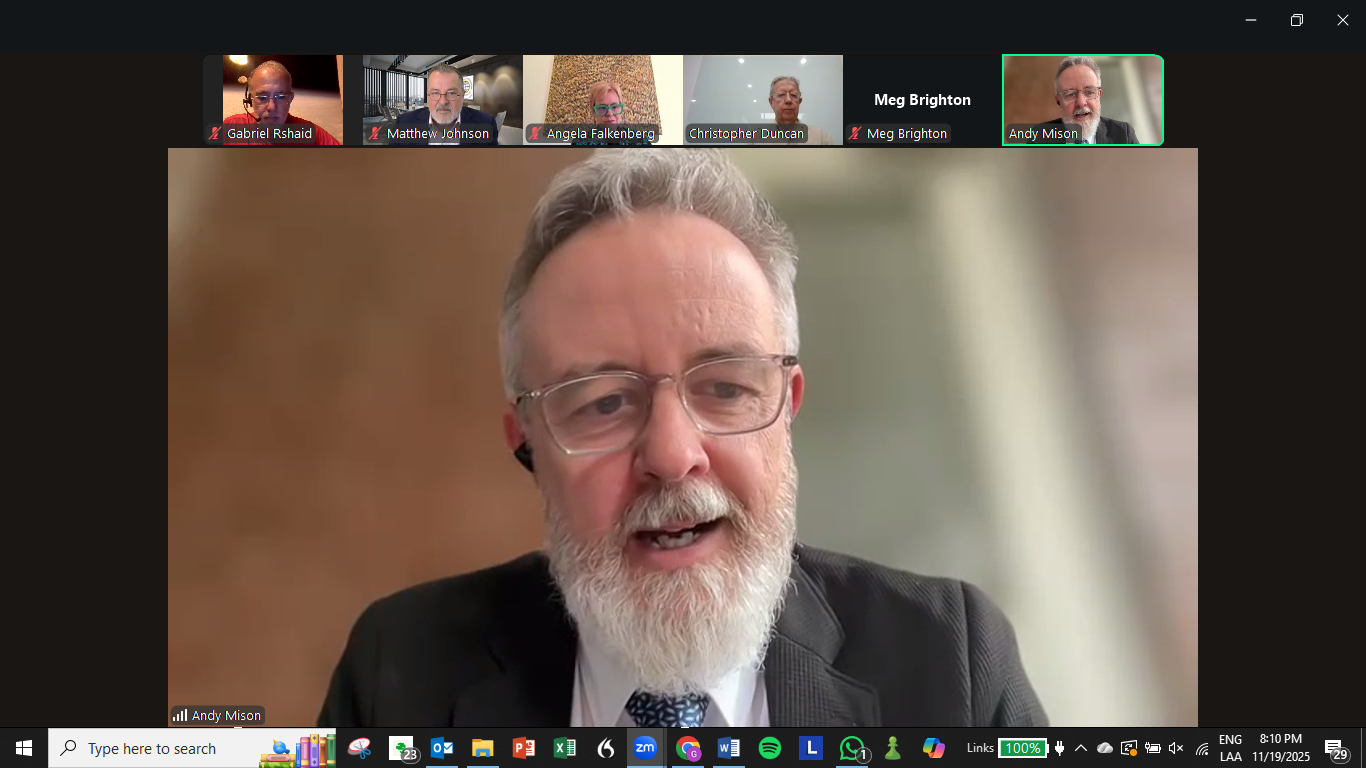
Andy – Australian Secondary Principals’ Association (ASPA)
Andy represents ASPA, which supports leaders of public secondary schools across Australia.
Moving beyond one-size-fits-all schooling
Schools are shifting towards flexible learning models built around students’ interests and capabilities. Frameworks like Big Picture Education connect learning to student passions and real-world projects, balancing content knowledge with skills like critical thinking and collaboration.
AI and new technologies
Educators are embracing AI to support learning, personalise instruction and reduce administrative burden – not to replace teachers.
Student agency & entrepreneurial mindset
ASPA runs a national Entrepreneurial Skills Project in partnership with Young Change Agents. The project:
- Develops an entrepreneurial mindset rather than “making everyone an entrepreneur”.
- Sets up youth councils and partners with local organisations so students tackle authentic community problems.
- Strengthens civics education and creates more engaged citizens.
Rethinking what “success” means
ASPA is a partner in the New Metrics for Success / Next Generation Learning project with the University of Melbourne and Melbourne Assessment. This initiative develops new assessment practices that value leadership, teamwork, ethical thinking and other capabilities alongside grades.
Dr Chris Duncan – AHISA (Heads of Independent Schools)
Chris is CEO of AHISA, representing principals of independent schools educating roughly a third of Australian students.
Educational neuroscience & critique of Cognitive Load Theory (CLT)
AHISA has been working with University of Sydney researchers (Assoc. Prof. Minkang Kim and Dr Derek Sankey) on educational neuroscience. Together they published what they consider the first comprehensive educational, philosophical and neuroscientific critique of Cognitive Load Theory (CLT).
They argue: CLT relies on an outdated, 1980s “mind as information-processing computer” model. Brains are self-organising and deeply shaped by emotion and feeling; there is no neurobiological evidence for an actual measurable “load”.
Neuroscience-informed conditions for learning
Chris refers to a rapid literature review commissioned by the Association of Independent Schools of NSW (AISNSW). From this work, six “necessary conditions of learning” are highlighted (interwoven, not linear):
Evidence-based teaching redefined: The review positions evidence-based teaching at the interface of scientific research, teachers’ pedagogical expertise, and the values of the school.
Martin – Independent Primary School Heads of Australia (IPSHA) & Barker College
Martin is national president of IPSHA and Head of Junior School at Barker College.
Character, capacity, confidence
He frames primary education as developing three core areas. Success is defined as each child’s growth, not league-table positions.
Capacity
Knowledge and skills to handle challenges.
Confidence
Built from capacity, not just rankings or scores.
Character
Heart, ethics, and the ability to positively impact others.
Belonging, relationships and adaptability
Students must feel safe and happy to learn; strong relationships and a sense of belonging are foundational. Teaching must be flexible and adaptable to local contexts – especially in remote and Indigenous communities. He highlights Barker’s three Indigenous campuses in regional NSW as an example of locally responsive, community-based education.
Matt Johnson – Australian Special Education Principals Association (AEPA) & “The Inclusion Illusion”
Disability Royal Commission & contested inclusion
He references Australia’s Royal Commission into Violence, Abuse, Neglect and Exploitation of People with Disability. Three commissioners argued for phasing out special schools and support classes.
- Around 98% of students with disability already attend mainstream schools.
- Special schools serve students with the most profound and complex needs.
- Inclusion is about programs and supports, not just a location.
- Parents who choose special schools strongly advocate for them; choice is central to equity.
Workforce and complexity
Complexity and diagnoses (especially autism) have increased markedly; the intake of special schools has become “very pointy-end”. There is a shortage of specialist teachers and therapists; universities have reduced in-depth special education degrees.
Multi-disciplinary, highly personalised work
Special schools build individual learning plans, behaviour plans, and independent living/health plans. They coordinate inter-agency support (NDIS, allied health) and daily communication with families is the norm.
Meg Brighton – Australian Government Department of Education
Meg is Deputy Secretary for Schools at the Australian Government Department of Education.
Policy Context & Questions
Society, knowledge, skills and technology (especially AI) are evolving rapidly. Central questions for the federal department include how to ensure systems are ready for future challenges and how to keep teachers and school leaders central to policy formation.
Digital wellbeing: social media age restriction
Meg notes that, from 10 November, Australia is implementing a world-first national social media age restriction so under-16s cannot have accounts on major platforms, combined with widespread school mobile-phone bans, to support wellbeing and focus on learning.
10-year national plan for “equity and excellence”
A cross-sector, 10-year plan anchors reforms with associated funding. Three major reform pillars in schools:
High-quality, evidence-based teaching tailored to individual needs, with extra support for those who need it.
Better initial teacher education (ITE), clearer expectations, and support for teachers as lifelong learners.
Structured approaches to wellbeing to ensure students feel safe, connected and ready to learn.
She references international discussions where the student-teacher relationship is seen as a form of shared human heritage that must be protected in the age of digital transformation.
Entities mentioned and Key URLs
Below are the main organisations, initiatives and frameworks referred to in the segment.
Australian Professional Associations
appa.asn.au Australian Secondary Principals’ Association (ASPA) Represents leaders of public secondary schools.
aspa.asn.au AHISA (Heads of Independent Schools) Represents independent schools educating 1/3 of students.
ahisa.edu.au IPSHA (Independent Primary Heads) Association for heads of independent primary schools.
ipsha.org.au AEPA (Special Education Principals) National body for leaders in special education.
aepa.org.au AGPPA (Gov Primary Principals) Represents leaders of government primary schools.
agppa.asn.au Catholic Secondary Principals Australia Peak body for Catholic secondary principals.
cspa.catholic.edu.au