
 A WORLD OF POSSIBILITY.Real voices. Real learning.
24H FOR CHANGE IN EDUCATION · 2026
The DNA
of Change.
Different places. Shared possibilities.
Discover the practices connecting learners, educators and communities across the world.
WHAT CONNECTS THESE STORIES?
Change takes many forms.
Look for the connections.
Across the conversations, seven themes keep emerging: learners taking the lead, purposeful work, culture, belonging, visible thinking, community and educators learning together.
These strands are an editorial reading of participants’ experiences. Explore one, follow a connection, or browse the whole collection.
FROM IDEAS TO PRACTICE
Explore the collection.
One example can connect several themes.
Open a story. Meet the people behind it.
101 examples across all seven themes
New Zealand
Getting the school walking
Stonefields School
Luca's Walk to School Wednesday project at Stonefields encourages classmates to walk, bike or scooter instead of travelling by car.
Explore this example
The story
Luca's Walk to School Wednesday project at Stonefields encourages classmates to walk, bike or scooter instead of travelling by car. He arranged hot-chocolate sponsorship from a local supermarket, recruited friends to help and visited classes to explain the idea. Participants were encouraged to bring reusable cups.
Luca recorded attendance and surveyed learners when he noticed the same faces returning. His reflections include both the contribution the activity made and the difficulty of reaching people who were not yet participating. The project connects environmental concern with organising, communication and evaluating a real initiative.
Explore further
Walk to School Wednesday / New World sponsorshipOrganisation website
A QUESTION TO TAKE WITH YOU
Where could learners make a meaningful decision in your setting?
New Zealand
A learner becomes the coach
Stonefields School
Anika stepped forward when a year-one netball team needed a coach.
Explore this example
The story
Anika stepped forward when a year-one netball team needed a coach. Drawing on her experience as a player, she committed to after-school practice and broke skills such as passing, footwork and positioning into smaller steps. She describes adapting her communication, including crouching to the younger children's level in a noisy environment.
Coaching also required keeping the team motivated and staying calm when things did not go as planned. Her reflection places leadership in helping others grow, showing how a learner can contribute through a skill she already enjoys.
Explore further
Student netball coachingOrganisation website
A QUESTION TO TAKE WITH YOU
Where could learners make a meaningful decision in your setting?
New Zealand
Making room for native wildlife
Stonefields School
A Stonefields learner noticed that the school grounds offered few suitable habitats for native insects and decided to create more.
Explore this example
The story
A Stonefields learner noticed that the school grounds offered few suitable habitats for native insects and decided to create more. She researched species and their needs, considered the trees already growing on site and consulted scientists with help from her mother. Detailed plans were discussed with teachers, the principal and the gardener, including choosing locations that would not be disturbed too often.
A local iwi nursery helped supply native plants. The completed habitats and explanatory signs connected ecological investigation with practical design and collaboration across the school and community.
Explore further
Native habitat / puriri moth / mānuka / wētā projectOrganisation website
A QUESTION TO TAKE WITH YOU
Where could learners make a meaningful decision in your setting?
New Zealand
Interests become contributions
Stonefields School
Stonefields gives learners school time to pursue interests, discover passions and contribute through Breakthrough learning.
Explore this example
The story
Stonefields gives learners school time to pursue interests, discover passions and contribute through Breakthrough learning. The Breakthrough Challenge helps them set goals and manage projects across three areas: a personal passion, a physical challenge and social impact. Completing work across those areas leads to a leadership pin.
Learner presentations include organising active travel to school, coaching younger netball players and developing wildlife habitats. The framework connects individual motivation with responsibility and contribution, while giving children opportunities to explain their decisions, difficulties and learning to others.
Explore further
Breakthrough Challenge and Leadership PinProgramme or background resource
A QUESTION TO TAKE WITH YOU
Where could learners make a meaningful decision in your setting?
Fiji
Choose your ocean pathway
International School Suva
International School Suva's Ocean Passport lets learners choose skills and experiences that interest them.
Explore this example
The story
International School Suva's Ocean Passport lets learners choose skills and experiences that interest them. Younger students develop competencies and cultural knowledge through badges such as snorkelling, paddling, traditional sailing or learning about marine scientists. Choices expand as their skills develop.
In years nine and ten, learners apply what they have learned in more sustained projects, including coral monitoring and ridge-to-reef inquiry. The programme connects student choice with a progression of skills, giving children different routes into understanding and caring for the ocean.
Explore further
Ocean Literacy / Ocean Passport / Ocean Learning CentreProject or related resource
A QUESTION TO TAKE WITH YOU
Where could learners make a meaningful decision in your setting?
Romania
Learners lead the family conversation
Colina International School
At Colina, family conversations become an opportunity for learners to explain their own development.
Explore this example
The story
At Colina, family conversations become an opportunity for learners to explain their own development. Older children lead the whole conversation, while younger children take part in its opening ten minutes. Preparation builds on the work they have already done to identify strengths, recognise difficulties and set intentions.
The conversation sits within a year-long rhythm: self-awareness and relationships first, followed by academic goals and plans to close learning gaps. This gives families a view of how their child understands learning, alongside the educators' perspective.
Explore further
Growth maps / student-led conferences / Grow JournalOrganisation website
A QUESTION TO TAKE WITH YOU
Where could learners make a meaningful decision in your setting?
Romania
Map the next step in learning
Colina International School
Growth maps help Colina learners connect self-awareness with action.
Explore this example
The story
Growth maps help Colina learners connect self-awareness with action. Early in the school year, children explore their strengths and the areas in which they want to grow. They build enough trust within their group to discuss both confidently, then create a personal map.
Educators make growth maps too, sometimes displaying them in the room. Later, children use assessments and their everyday work to identify academic gaps and plan a response. Individual spotlight conversations give them space to explain progress, acknowledge when they are stuck and revise an intention that is not working.
Explore further
Growth maps / student-led conferences / Grow JournalOrganisation website
A QUESTION TO TAKE WITH YOU
Where could learners make a meaningful decision in your setting?
Mexico
Students step into teaching
Wexford Education System
Wexford students put their English and communication skills into practice by teaching younger children.
Explore this example
The story
Wexford students put their English and communication skills into practice by teaching younger children. Their reflections describe the challenge of giving a clear message, leading a group and adapting when a lesson does not unfold exactly as planned. Working with different ages, from pre-first to sixth grade, requires them to notice how children learn and collaborate.
They also teach in pairs, making teamwork part of the task. The experience turns familiar school skills into a real responsibility and helps students recognise both the demands of teaching and their own developing abilities.
Explore further
Students training teachers / communication and collaborationOrganisation website
A QUESTION TO TAKE WITH YOU
Where could learners make a meaningful decision in your setting?
Mexico
Children become the museum guides
Wexford Education System
Wexford's preschool bee project began with children's questions: where bees live, why they sting and where honey comes from.
Explore this example
The story
Wexford's preschool bee project began with children's questions: where bees live, why they sting and where honey comes from. Children investigated real honeycomb, used thinking routines and built a mind map to gather their discoveries. Their written and creative work became a bee museum for families.
The children led the tours, explaining different bees, honey production, pollination and why bees need care. Preparing the museum also meant listening to classmates, taking turns and deciding together what to include. A question from the children grew into an opportunity for them to teach others.
Explore further
Bee / apiary preschool projectOrganisation website
A QUESTION TO TAKE WITH YOU
Where could learners make a meaningful decision in your setting?
Spain
Students look out for one another
Colegios Zola
Zola's student-helper programme makes care for classmates a responsibility that young people can practise.
Explore this example
The story
Zola's student-helper programme makes care for classmates a responsibility that young people can practise. Two learners in each class are selected with attention to the social and emotional qualities the role requires. The guidance department prepares them to notice peers who are having difficulty connecting with others or experiencing conflict.
This work belongs to the school's wider emotional-learning programme, which also includes regular reflection and routines for resolving disagreements. The role gives students a way to contribute to the daily quality of relationships in their classroom.
Explore further
Alumnos ayudantesProject or related resource
A QUESTION TO TAKE WITH YOU
Where could learners make a meaningful decision in your setting?
Spain
From an idea to a class business
Colegios Zola
Zola's entrepreneurship project takes learners from an idea through creating a business and launching a product.
Explore this example
The story
Zola's entrepreneurship project takes learners from an idea through creating a business and launching a product. Students develop a physical or digital design, consider business roles and resources, and prepare marketing materials for contemporary media. The project extends across the school year, giving them time to connect decisions rather than complete a single exercise.
A student describes enjoying the search for a useful product that she and her classmates might want in everyday life. The presentation stresses a human approach to enterprise and the value of making learning tangible.
Explore further
Colegios ZolaOrganisation website
A QUESTION TO TAKE WITH YOU
Where could learners make a meaningful decision in your setting?
United States
A pathway that fits the learner
Student Choice High School
Student Choice High School combines self-paced courses with competency-based progression.
Explore this example
The story
Student Choice High School combines self-paced courses with competency-based progression. Learners move forward when they demonstrate mastery, supported by certified teachers, small classes and an online curriculum they can access outside the usual school day. The presenter connects pacing with self-knowledge: noticing when one learns best, recognising when help is needed and identifying avoidance.
An individual plan helps learners see their progress and next steps. The model aims to fit education around real responsibilities while giving students meaningful decisions to make about how they learn.
Explore further
Student Choice High School / Amy Palatucci / Coronado High SchoolOrganisation website
A QUESTION TO TAKE WITH YOU
Where could learners make a meaningful decision in your setting?
Hawaiʻi, USA
Young people help decide what matters
Hawaiʻi Center for Youth Philanthropy
Young people in the Hawaiʻi Center for Youth Philanthropy help decide how resources should be used.
Explore this example
The story
Young people in the Hawaiʻi Center for Youth Philanthropy help decide how resources should be used. The presenter describes a situation in which funders offered support and asked the youth board where it should go. The young people spent meetings considering which organisations to support and what makes a worthwhile recipient, then made allocation decisions.
This sits within an intergenerational structure in which youth have a central decision-making role. Philanthropy becomes a setting for learning judgement, responsibility and community awareness through choices with consequences beyond the meeting room.
Explore further
Youth / intergenerational advisory board and grantmakingProgramme or background resource
A QUESTION TO TAKE WITH YOU
Where could learners make a meaningful decision in your setting?
Venezuela
A student builds a tool for the comic project
Unidad Educativa Kavac
Kavac's comic project begins with writing and develops into an opportunity to share stories with younger learners.
Explore this example
The story
Kavac's comic project begins with writing and develops into an opportunity to share stories with younger learners. Secondary students present their comics to primary classes, then the school community votes for favourites in different categories. One student proposed and built an application to run the voting.
Teachers, administrative staff and maintenance staff could all read the comics and participate. The app made a practical contribution to an existing school activity, while showing that learners could shape how the project worked rather than only follow a plan set by adults.
Explore further
Student-built comic application / comic competitionOrganisation website
A QUESTION TO TAKE WITH YOU
Where could learners make a meaningful decision in your setting?
Colombia
Environmental ideas become collective action
Colegio Colombo Británico
Colegio Colombo Británico connects environmental learning with practical changes on campus.
Explore this example
The story
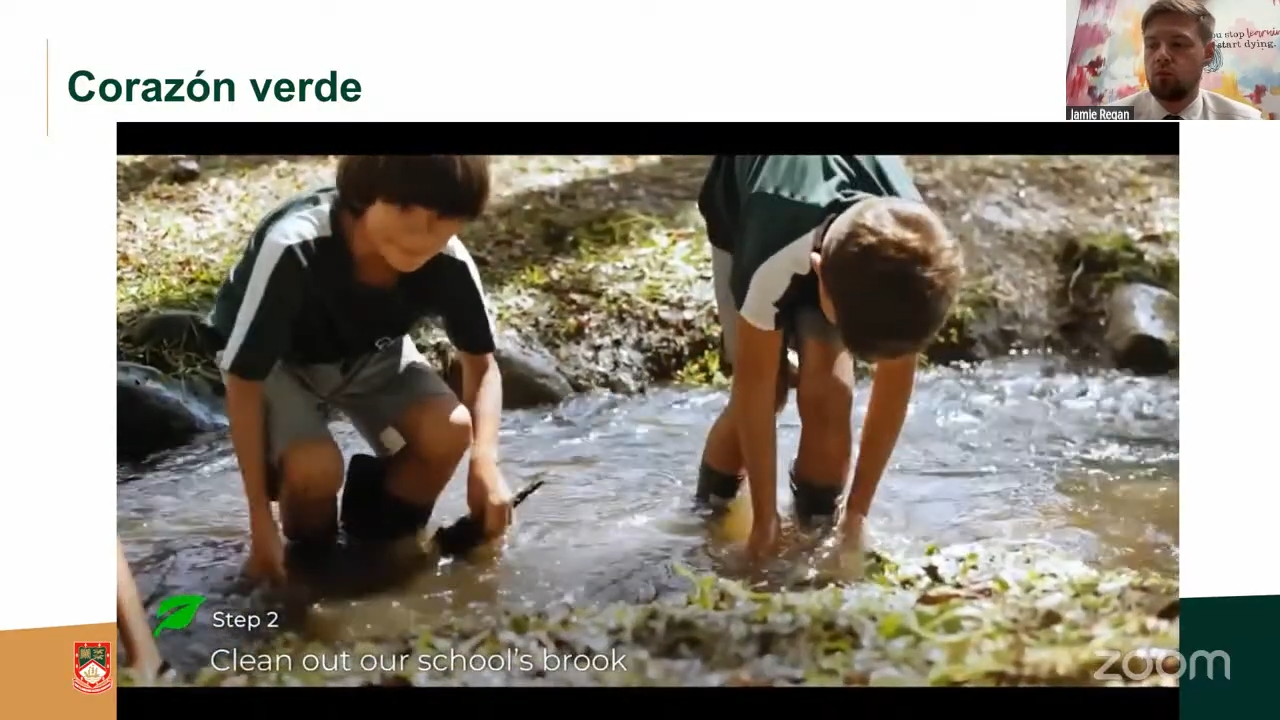
Colegio Colombo Británico connects environmental learning with practical changes on campus. Students explain how food waste becomes compost, which is then used to support growing projects and trees destined for reforestation. They also describe noticing dry areas with little vegetation and deciding to plant flowers, as well as separating plastic bottles to make recycling easier.
The team brings together students from sixth to twelfth grade. These examples connect observation, proposals and collective action: learners identify something they can improve, organise a response and take responsibility for a shared environment.
Explore further
Corazón VerdeProject or related resource
A QUESTION TO TAKE WITH YOU
Where could learners make a meaningful decision in your setting?
Venezuela
A rescue robot begins with a real concern
Unidad Educativa Kavac
After an earthquake in Venezuela, Kavac students considered how technology might help rescuers.
Explore this example
The story
After an earthquake in Venezuela, Kavac students considered how technology might help rescuers. They describe a robot project intended to support the search for people after a disaster. Their work uses Arduino, with robotics lessons introducing programming and circuit construction.
The account is a brief presentation of a student development project, rather than a claim that a rescue device has been deployed. Its educational value lies in the starting question: how could the technical skills being learned in school respond to a real concern in the community?
Explore further
Arduino rescue robotProgramme or background resource
A QUESTION TO TAKE WITH YOU
Which local challenge could give your next learning project a purpose?
Vietnam
Test it. Break it. Learn from it.
Delta Global School
A seventh-grade learner at Delta Global School began by asking why some towers and bridges last while others collapse.
Explore this example
The story
A seventh-grade learner at Delta Global School began by asking why some towers and bridges last while others collapse. With a science teacher as mentor, she investigated trusses, built prototypes from sticks and string, added weights until they failed and recorded the results. Early collapses became evidence for improving the design.
At the STEM fair she explained her final tower to a visitor and answered questions without notes. She later ran a workshop where sixth-graders built and tested their own towers, turning an individual inquiry into learning shared with younger students.
Explore further
Grade 7 bridge/tower prototypingOrganisation website
A QUESTION TO TAKE WITH YOU
Which local challenge could give your next learning project a purpose?
Vietnam
Is AI helping me think?
Delta Global School
A Delta Global School learner asked whether AI was helping him become a better thinker or doing the thinking for him.
Explore this example
The story
A Delta Global School learner asked whether AI was helping him become a better thinker or doing the thinking for him. The question appeared within the school's discussion of interdisciplinary research and required looking beyond a single subject. The presenter connects the inquiry with cognitive psychology and evidence-based investigation.
Rather than treating AI only as a tool to use or prohibit, the question makes its relationship with learning something a student can examine. It is an example of learners using research to investigate a technology that already affects their own experience.
Explore further
AP Seminar / AP ResearchProject or related resource
A QUESTION TO TAKE WITH YOU
Which local challenge could give your next learning project a purpose?
New Zealand
Aerospace for Good
Futures Labs
Futures Labs' Aerospace for Good asks young people to consider what an emerging industry makes possible, who benefits and what responsibilities come with new technologies.
Explore this example
The story
Futures Labs' Aerospace for Good asks young people to consider what an emerging industry makes possible, who benefits and what responsibilities come with new technologies. The pilot brought together year-eleven students from different schools and backgrounds, including young people who might not already see aerospace as a place for them.
Participants met people working in the industry, encountered unfamiliar settings and contributed ideas. The learning journey was organised around seeing, questioning and shaping the future, connecting career awareness with ethical inquiry and learners' sense that their perspectives matter.
Explore further
Kylie Horgan / Futures Labs HQOrganisation website
A QUESTION TO TAKE WITH YOU
Which local challenge could give your next learning project a purpose?
New Zealand
Investigating orbital data centres
Futures Labs
As part of Aerospace for Good, Futures Labs learners considered orbital data centres in the year 2040.
Explore this example
The story
As part of Aerospace for Good, Futures Labs learners considered orbital data centres in the year 2040. The innovation challenge followed encounters with the industry and questions about who benefits from emerging technology. Students were asked to imagine what such a development could look like and consider its consequences for people, place and planet.
It is a future scenario for investigation, rather than a claim that students built a functioning orbital system. The challenge connects technological possibility with wider questions of responsibility and invites young people to help shape the discussion.
Explore further
Eight-week Futures Labs model / orbital data centres challengeOrganisation website
A QUESTION TO TAKE WITH YOU
Which local challenge could give your next learning project a purpose?
Fiji
Reading the changing reef
International School Suva
Year-ten learners at International School Suva take responsibility for a coral-monitoring project passed on by earlier students.
Explore this example
The story
Year-ten learners at International School Suva take responsibility for a coral-monitoring project passed on by earlier students. They travel to a local reef, observe changes and use photographs to build a record over time. Their presentation includes comparisons between earlier and more recent images, observations of coral health and attention to the marine life around the site.
The work connects classroom learning with a nearby ecosystem and a continuing question that cannot be answered in one visit. Learners become contributors to an ongoing record of their local environment.
Explore further
Ocean Guardians / coral monitoring / animal identificationProgramme or background resource
A QUESTION TO TAKE WITH YOU
Which local challenge could give your next learning project a purpose?
Fiji
Look closely beneath the surface
International School Suva
Animal identification combines photography, observation and growing confidence in the water.
Explore this example
The story
Animal identification combines photography, observation and growing confidence in the water. A learner at International School Suva describes beginning in the pool, where teachers place model coral for students to photograph underwater. The activity then moves to the ocean, where students take pictures of real fish and coral.
This sequence lets learners practise using equipment before applying it in a more complex environment. The badge builds on earlier water skills and opens a new purpose for them: looking closely, noticing differences and learning more about the living world beneath the surface.
Explore further
Ocean Literacy / Ocean Passport / Ocean Learning CentreProject or related resource
A QUESTION TO TAKE WITH YOU
Which local challenge could give your next learning project a purpose?
Australia & Cambodia
Practical skills in service of a community
The Industry School / New Hope Cambodia
The Industry School's Cambodia experience connects vocational skills with community work through New Hope in Siem Reap.
Explore this example
The story
The Industry School's Cambodia experience connects vocational skills with community work through New Hope in Siem Reap. The presenter describes 26 young people working in two groups to build houses for families, while students reflect on learning from local ways of building and from the people they met. Their reflections emphasise gratitude and recognising what they could contribute.
Some discuss returning to volunteer and considering how similar skills might help communities closer to home. Practical work becomes a setting for technical learning, cultural encounters and reflection on responsibility.
Explore further
International Service Project — CambodiaProject or related resource
A QUESTION TO TAKE WITH YOU
Which local challenge could give your next learning project a purpose?
Australia
Learning moves between school and work
The Industry School
The Industry School alternates blocks of school study with time in industry.
Explore this example
The story
The Industry School alternates blocks of school study with time in industry. The presenter describes a ten-week term in which students spend five weeks on academic learning and certificates, followed by five weeks in workplaces. Pathways span trades and other professions, connecting education with students' interests in future work.
Small classes and individualised support accompany the model. Learners encounter expectations both in school and on the job, so communication, responsibility and technical skills are practised in settings where they have an immediate purpose.
Explore further
The Industry School / Peter FosterProgramme or background resource
A QUESTION TO TAKE WITH YOU
Which local challenge could give your next learning project a purpose?
Australia
A pathway into the equine world
The Industry School
The Industry School's Equine Academy connects students with an industry that includes stable work, racing and veterinary pathways.
Explore this example
The story
The Industry School's Equine Academy connects students with an industry that includes stable work, racing and veterinary pathways. It sits within a wider set of academies, including construction, energy, automotive and marine fields. The school's alternating study and workplace model gives vocational interests a place alongside academic learning.
The equine example illustrates how a broad interest in animals can lead to different possible roles, rather than a single job destination. It gives students a way to explore an industry while continuing their senior schooling.
Explore further
Equine AcademyProject or related resource
A QUESTION TO TAKE WITH YOU
Which local challenge could give your next learning project a purpose?
United States
Recognising learning beyond the classroom
Student Choice High School
Student Choice High School recognises learning that happens through work and service.
Explore this example
The story
Student Choice High School recognises learning that happens through work and service. Students can earn elective credit while participating in real workplaces or contributing to their communities. The presenter highlights communication, collaboration and responding to supervisors' expectations as skills that become concrete in a workplace.
Service learning also gives students who have received support an opportunity to support others. These pathways connect the school's competency framework with experience outside the classroom and acknowledge that meaningful learning can happen while young people meet responsibilities in their wider lives.
Explore further
Work-study / service-learning credits / flexible pathwaysProgramme or background resource
A QUESTION TO TAKE WITH YOU
Which local challenge could give your next learning project a purpose?
Australia
The city becomes a learning setting
Immanuel Lutheran College
Immanuel Lutheran College's Urban Campus was presented as a project in development: a small senior campus in the Sunshine Coast's central business district.
Explore this example
The story
Immanuel Lutheran College's Urban Campus was presented as a project in development: a small senior campus in the Sunshine Coast's central business district. The proposal responds to learners who are not thriving in the existing senior model and questions the assumptions behind conventional timetables and classrooms. Student focus groups have helped challenge and refine the vision.
The presenter also identifies the work needed to build parents' understanding and confidence. The example is a window into designing a different school experience, with learner input shaping the plan before the new site opens.
Explore further
Immanuel Lutheran College — Urban Campus ProjectProject or related resource
A QUESTION TO TAKE WITH YOU
Which local challenge could give your next learning project a purpose?
Mexico
Build a restaurant, connect the subjects
Wexford Education System
Wexford learners designed a restaurant as part of an interdisciplinary project.
Explore this example
The story
Wexford learners designed a restaurant as part of an interdisciplinary project. A guided imagination activity helped them picture the space, its staff and atmosphere before making design choices. They developed menus, considered how dishes and drinks should be organised, and created a logo, slogan and apron.
Students explain how different subjects and making activities contributed to the same idea. The restaurant gives the work a shared purpose: writing, organising information, imagining a customer experience and creating physical products become connected parts of something the learners can describe as their own.
Explore further
Student restaurant / logos / aprons / robotOrganisation website
A QUESTION TO TAKE WITH YOU
Which local challenge could give your next learning project a purpose?
Mexico
Connect what we eat with the world around us
Wexford Education System
Un chef que cuida el medio ambiente connected food and environmental concerns across Wexford's subjects and making spaces.
Explore this example
The story
Un chef que cuida el medio ambiente connected food and environmental concerns across Wexford's subjects and making spaces. Students helped name the project by proposing headlines, voting and using a bar chart to show the result. Their account links mathematics with decision-making, and goes on to describe culinary and restaurant-design activities.
The shared project gave more than ten topics a common context. It also made learners' choices visible from the beginning: the title, the design and the way activities connected were things they could explain, discuss and help shape.
Explore further
Food and environment interdisciplinary projectOrganisation website
A QUESTION TO TAKE WITH YOU
Which local challenge could give your next learning project a purpose?
Spain
Rethinking consumption through Green Friday
Colegios Zola
Zola reframes the week associated with Black Friday as Green Friday, connecting it with reflection on consumption and food waste.
Explore this example
The story
Zola reframes the week associated with Black Friday as Green Friday, connecting it with reflection on consumption and food waste. The initiative is presented alongside an interdisciplinary food-bank project and a food drive involving the Madrid region's food bank.
Learners are encouraged to think about what they spend money on and the ecological implications of consumption. Bringing these activities together gives the school a concrete occasion to connect environmental responsibility with solidarity, and to question a familiar commercial event through practical school activity.
Explore further
Green FridayOrganisation website
A QUESTION TO TAKE WITH YOU
Which local challenge could give your next learning project a purpose?
Hawaiʻi, USA
Restore a fishpond, reconnect with place
Individualized Realized / HCYP
The Hawaiʻi presentation places community learning within the long-term restoration of Waikalua Loko Iʻa fishpond.
Explore this example
The story
The Hawaiʻi presentation places community learning within the long-term restoration of Waikalua Loko Iʻa fishpond. The account connects the site with earlier food systems and describes decades of work involving the land, the surrounding neighbourhood and changing practices nearby. The group gathers in this setting as part of learning with community partners.
The fishpond makes ecological knowledge and cultural history tangible in a place that is still being cared for. It also illustrates the time scale of change: sustained relationships and practical restoration build on work begun long before the current learners arrived.
Explore further
Waikalua Loko Iʻa fishpondProject or related resource
A QUESTION TO TAKE WITH YOU
Which local challenge could give your next learning project a purpose?
Fiji
Learning to navigate through cultural knowledge
International School Suva / Uto ni Yalo
International School Suva works with Uto ni Yalo to connect learners with traditional sailing knowledge.
Explore this example
The story
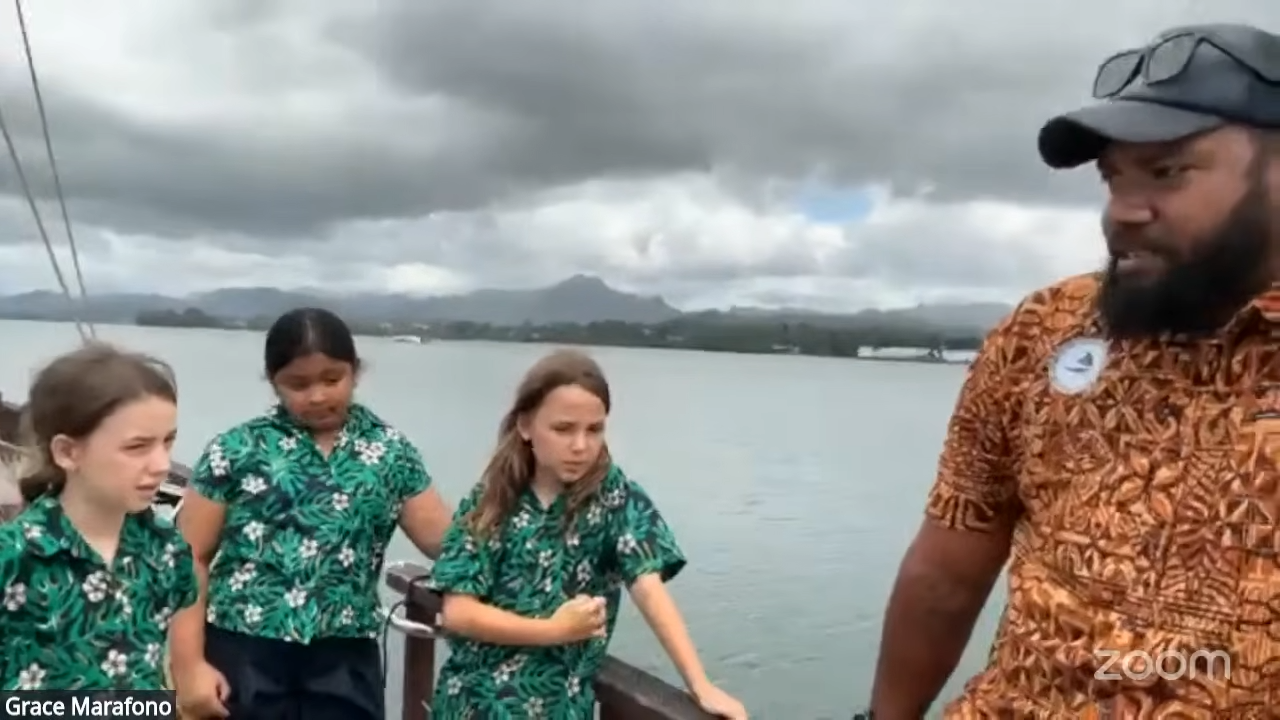
International School Suva works with Uto ni Yalo to connect learners with traditional sailing knowledge. On board, students discuss knots used to secure the vessel and sails, then participate in a lesson on navigation. The teaching connects compass directions with reading the sky and using stars at sea.
Students also encounter the stories carried by the vessel's carvings and its voyages. The partnership brings cultural expertise into the curriculum through a real craft, making navigation, practical skills and storytelling parts of the same experience.
Explore further
Traditional sailing, outrigger learning and celestial navigationProgramme or background resource
A QUESTION TO TAKE WITH YOU
Whose knowledge and which places could enrich your curriculum?
Fiji
Reefs and mangroves become learning places
International School Suva
International School Suva uses its coastal setting as a continuing learning environment.
Explore this example
The story
International School Suva uses its coastal setting as a continuing learning environment. Ocean learning is integrated into primary inquiry, secondary subjects, camps and interdisciplinary work. Learners encounter reefs and mangroves, observe marine life and explore both the ocean's importance to people and people's impact on it.
School-based preparation connects with experiences outside the campus and with community expertise. The programme aims to move from knowledge towards empathy and action, using places children can return to and recognise as part of their own community.
Explore further
Ocean Literacy / Ocean Passport / Ocean Learning CentreProject or related resource
A QUESTION TO TAKE WITH YOU
Whose knowledge and which places could enrich your curriculum?
New Zealand
Culture is part of the school's language
Stonefields School
Māori language and cultural references form part of how Stonefields learners introduce and explain their work.
Explore this example
The story
Māori language and cultural references form part of how Stonefields learners introduce and explain their work. One learner begins a habitat project with a whakataukī connecting the survival of birds with the plants and places they need. She then relates that idea to her investigation of native habitats on the school grounds.
The cultural reference is connected to the purpose of the project rather than added as a separate topic. The example shows how language, local knowledge and care for the environment can be woven into a learner's explanation of an action they have taken.
A QUESTION TO TAKE WITH YOU
Whose knowledge and which places could enrich your curriculum?
New Zealand
Science learning with Pacific perspectives
Kelston Girls’ College
A Kelston Girls' College learner connects participation in the Pacific Health Science Academy with her hopes for working in health.
Explore this example
The story
A Kelston Girls' College learner connects participation in the Pacific Health Science Academy with her hopes for working in health. She describes wanting to combine cultural understanding with medical knowledge so that Pacific people, including elders, can communicate their experiences and receive care that recognises them.
Family relationships and her own migration experience help explain why that ambition matters to her. The example connects science education with identity and purpose, showing how a future career can be understood as a contribution to people and communities a learner already cares about.
Explore further
Kelston Girls’ College / Pacific Health Science AcademyProject or related resource
A QUESTION TO TAKE WITH YOU
Whose knowledge and which places could enrich your curriculum?
Hawaiʻi, USA
Local concepts shape the learning conversation
Individualized Realized / HCYP
The Hawaiʻi programme connects learning with place, relationships and the gifts a community already holds.
Explore this example
The story
The Hawaiʻi programme connects learning with place, relationships and the gifts a community already holds. Learners listen, build relationships, consider different ways of knowing and make connections visible through mapping. The presenter links this work with Hawaiian concepts of abundance, responsibility and shared purpose.
The process begins with identity and extends into working with others, continually returning to observation and reflection. Rather than using cultural language only as decoration, the discussion shows how local ideas can shape the questions people ask and how they understand their contribution to community life.
A QUESTION TO TAKE WITH YOU
Whose knowledge and which places could enrich your curriculum?
Hawaiʻi, USA
Building with community and culture
Individualized Realized / HCYP
Community gatherings in the Hawaiʻi programme include practical work that contributes to the place hosting them.
Explore this example
The story
Community gatherings in the Hawaiʻi programme include practical work that contributes to the place hosting them. The presenter describes helping build a roof for a canoe hālau, alongside other occasions involving planting and cleaning. Working together creates opportunities to learn through participation and strengthen relationships across ages and roles.
The account emphasises reciprocity: participants are contributing to a community, but are also receiving connection and learning through the work. The canoe-house example makes that principle concrete through a shared task with a visible purpose.
Explore further
Canoe hālau construction / community projectOrganisation website
A QUESTION TO TAKE WITH YOU
Whose knowledge and which places could enrich your curriculum?
Vietnam
An invitation to join the rhythm
Delta Global School
Delta Global School students prepared their own lion dance for a festival, practising after school rather than relying on hired performers.
Explore this example
The story
Delta Global School students prepared their own lion dance for a festival, practising after school rather than relying on hired performers. During the celebration, older members of the team invited a new sixth-grade student to play the drum. He had spoken little in his first weeks at school; by the end of the afternoon, the presenter recalls, many more people knew him.
The example shows belonging being created through a specific invitation and a meaningful role. Cultural participation becomes an opportunity for peers to recognise and include someone new.
Explore further
Lion dance / cultural festivalOrganisation website
A QUESTION TO TAKE WITH YOU
Whose knowledge and which places could enrich your curriculum?
Vietnam
Local legends find a new stage
Delta Global School
For a cultural night, Delta Global School students wrote and performed a musical play in English based on Vietnamese legends, including Thánh Gióng.
Explore this example
The story
For a cultural night, Delta Global School students wrote and performed a musical play in English based on Vietnamese legends, including Thánh Gióng. They adapted folktales into a script, selected and arranged music, chose costumes and backdrops, and directed scenes with teachers providing guidance. The project connected Vietnamese literary learning with English, performance and collaborative production.
Students were responsible for much of the creative work themselves. Local stories became material for a contemporary production, allowing language learning and cultural knowledge to develop together through decisions the learners could own.
Explore further
Thánh Gióng interdisciplinary theatreOrganisation website
A QUESTION TO TAKE WITH YOU
Whose knowledge and which places could enrich your curriculum?
Vietnam
A room connects everyday life and discovery
Shining Star Education System
Shining Star describes a prepared Montessori classroom where practical life, sensory exploration, language, mathematics and culture are connected.
Explore this example
The story
Shining Star describes a prepared Montessori classroom where practical life, sensory exploration, language, mathematics and culture are connected. Science, art, music, history and geography are available through hands-on discovery rather than rigidly separated subject periods.
The environment is designed to be orderly, accessible and grounded in real life, while the adult's role extends beyond arranging materials to guiding the learning. The example connects curriculum design with the choices a child can make in a room: how resources are placed and related helps shape opportunities for independence and exploration.
Explore further
Montessori Infant Community / Children’s HouseOrganisation website
A QUESTION TO TAKE WITH YOU
Whose knowledge and which places could enrich your curriculum?
Venezuela
Language learning responds to heritage
Unidad Educativa Kavac
At Kavac, many students choosing Arabic have family connections to the language and want to use it in everyday conversation.
Explore this example
The story
At Kavac, many students choosing Arabic have family connections to the language and want to use it in everyday conversation. Teaching therefore gives particular attention to listening and speaking, helping learners communicate with relatives with greater confidence. The educator distinguishes conversational Arabic from formal Arabic and explains how the two can support one another.
Conversations provide a starting point for examining formal language, grammar, reading and writing. The programme responds to learners' reasons for studying a language and makes their cultural and family connections part of the curriculum.
Explore further
ACTFL proficiency guidelines / ArabicProject or related resource
A QUESTION TO TAKE WITH YOU
Whose knowledge and which places could enrich your curriculum?
Venezuela
A novel opens a world of history
Unidad Educativa Kavac
Kavac's tenth-grade work on Las lanzas coloradas turns a reading project into a multi-format presentation for the book fair.
Explore this example
The story
Kavac's tenth-grade work on Las lanzas coloradas turns a reading project into a multi-format presentation for the book fair. Students dress as characters, construct models, create paintings and sculpture, and develop a website locating places associated with the story's battles. Visitors encounter the novel through a room shaped by students' interpretations.
The project combines literary understanding with historical and geographical inquiry, while giving learners different ways to communicate what they have understood. Reading remains the foundation, but the response extends into performance, visual art and digital work.
Explore further
Las lanzas coloradas — Arturo Uslar PietriProject or related resource
A QUESTION TO TAKE WITH YOU
Whose knowledge and which places could enrich your curriculum?
Colombia
Discover a country through experience
Colegio Colombo Británico
National trips at Colegio Colombo Británico connect learners with Colombian landscapes and with the practical challenges of travelling together.
Explore this example
The story
National trips at Colegio Colombo Británico connect learners with Colombian landscapes and with the practical challenges of travelling together. A student describing Chicamocha recalls walking into and out of the canyon, learning perseverance and enjoying time without devices. Other students discuss putting up tents, cooking and developing friendships on trips.
Their accounts connect cultural learning with everyday independence: managing equipment, helping a group and adapting when an activity is difficult. The experience gives learners something concrete to reflect on about both their country and their own capabilities.
Explore further
Experiential trips: Cocora, Boyacá, Chicamocha, Morrosquillo, AmazonasProject or related resource
A QUESTION TO TAKE WITH YOU
Whose knowledge and which places could enrich your curriculum?
Colombia
Learning through encounters across borders
Colegio Colombo Británico
Students at Colegio Colombo Británico describe exchanges that make independence a daily practice.
Explore this example
The story
Students at Colegio Colombo Británico describe exchanges that make independence a daily practice. Boarding-school experiences in England put them alongside learners from several countries and require them to manage tasks such as laundry, making beds and organising rooms. They also discuss adapting to unfamiliar routines and spending time away from family.
Related Round Square experiences widen those encounters through international activities and service. The students emphasise relationships, cultural understanding and confidence in new situations, showing how learning can emerge from the responsibilities of living in another community.
Explore further
Round SquareProject or related resource
A QUESTION TO TAKE WITH YOU
Whose knowledge and which places could enrich your curriculum?
Colombia
An intercultural encounter around a shared meal
Colegio Colombo Británico
During a Round Square experience in Dubai, Colegio Colombo Británico students visited a gurdwara and participated in its community kitchen.
Explore this example
The story
During a Round Square experience in Dubai, Colegio Colombo Británico students visited a gurdwara and participated in its community kitchen. Their account includes helping prepare food, serving meals and cleaning. The visit combined learning about unfamiliar customs with contributing to a shared activity.
Students describe getting a closer understanding of another community through participation. The example offers a concrete form of intercultural learning: students do not only observe a place, but listen, adapt to its expectations and take part in work alongside others.
A QUESTION TO TAKE WITH YOU
Whose knowledge and which places could enrich your curriculum?
Mexico
Meet the people who work with bees
Wexford Education System
After investigating bees and presenting their own museum, Wexford preschoolers visited an apiary.
Explore this example
The story
After investigating bees and presenting their own museum, Wexford preschoolers visited an apiary. They met beekeepers, wore protective clothing and observed bees and honeycomb in a real working setting. In the presentation, children recall what they saw and explain ideas about nectar, pollen and honey in their own words.
The visit gave them a chance to connect classroom questions and models with direct observation. Family involvement in the museum and the encounter with beekeepers extended the investigation beyond school and gave children several audiences for sharing their learning.
Explore further
Bee / apiary preschool projectOrganisation website
A QUESTION TO TAKE WITH YOU
Whose knowledge and which places could enrich your curriculum?
United States
Land becomes a shared place to learn
Braiding Roots / Sacred Seasons Project
Sacred Seasons opens the land on which its organisers live to shared learning and community activity.
Explore this example
The story
Sacred Seasons opens the land on which its organisers live to shared learning and community activity. The presenter describes opportunities to learn regenerative practices, develop a relationship with the land and participate in Indigenous ceremony. Braiding Roots, a related consulting practice, works with educators, nonprofits and youth organisers.
The account connects these activities with purpose, renewal and relationships across generations. Land becomes more than privately held space: it becomes a place where people can gather, learn from practices and knowledge, and build connections that sustain their wider work.
Explore further
Braiding Roots / Sacred Seasons Project / Maria RomeroOrganisation website
A QUESTION TO TAKE WITH YOU
Whose knowledge and which places could enrich your curriculum?
Romania
A place to pause and regulate
Colina International School
Colina's calm corner gives children somewhere to pause when they feel overstimulated or are still adapting to school.
Explore this example
The story
Colina's calm corner gives children somewhere to pause when they feel overstimulated or are still adapting to school. The space offers sensory materials, mindfulness resources and creative tools for regulation. It is part of a broader approach in which art can provide a breathing space as well as a way to make something.
The educator also describes short creative sessions where children choose an activity, express feelings or simply take a break from an overwhelming experience. The emphasis is on offering practical choices within the school day and recognising when a learner needs time to settle.
Explore further
Calm cornerOrganisation website
A QUESTION TO TAKE WITH YOU
What everyday routine could help more learners feel recognised?
Romania
Start the day with relationships
Colina International School
Colina makes regular time for relationships through crew meetings, tribe meetings and community meetings.
Explore this example
The story
Colina makes regular time for relationships through crew meetings, tribe meetings and community meetings. Morning crew meetings bring classmates together to connect, reflect and explore themselves and their relationships without making academic content the immediate focus. Tribe meetings connect children of different ages, widening relationships beyond the class.
Community meetings add opportunities for older learners to demonstrate leadership and take responsibility for shared spaces. Together, these routines give belonging a place in the timetable and give children repeated opportunities to practise participating in a community.
Explore further
Crew / tribe meetingsOrganisation website
A QUESTION TO TAKE WITH YOU
What everyday routine could help more learners feel recognised?
Romania
Art makes room for feeling
Colina International School
An art expedition at Colina connected creative activity with neuroscience and emotional regulation.
Explore this example
The story
An art expedition at Colina connected creative activity with neuroscience and emotional regulation. Children explored bilateral movement and used their bodies to make marks, turning classrooms into large canvases. The educator describes the experience as a way to notice how moving and creating can feel different from simply completing a painting.
The work culminated in an immersive gallery where children and parents could try the explorations themselves. This connected the creative process, bodily awareness and family participation, giving visitors an experience of the learning rather than only a display of finished pictures.
Explore further
Transform exhibitionsOrganisation website
A QUESTION TO TAKE WITH YOU
What everyday routine could help more learners feel recognised?
Spain
Make space for an emotional check-in
Colegios Zola
Zola's emotional check-in gives teachers and learners a shared moment to notice how they are feeling at the start of the day.
Explore this example
The story
Zola's emotional check-in gives teachers and learners a shared moment to notice how they are feeling at the start of the day. The emocionómetro is adapted for different ages and helps participants put feelings into words and consider what they may need. Adults participate too, making emotional awareness a shared practice.
The routine is part of a wider programme that includes weekly emotional-learning time, reflection on values and approaches to conflict. Its practical strength is its regularity: recognising feelings becomes part of everyday school life.
Explore further
EmocionómetroProject or related resource
A QUESTION TO TAKE WITH YOU
What everyday routine could help more learners feel recognised?
Spain
A calmer return from recess
Colegios Zola
After recess, Zola classes use mindfulness or relaxation exercises to help learners settle into the next lesson.
Explore this example
The story
After recess, Zola classes use mindfulness or relaxation exercises to help learners settle into the next lesson. The routine acknowledges the shift from the energy of the playground to a different kind of attention in class. Educators describe it as a way to lower the pace and support concentration.
It is one of several established emotional-learning routines, alongside morning check-ins and a shared process for resolving conflict. Rather than treating well-being as an occasional event, the school builds short opportunities to practise regulation into the rhythm of the day.
Explore further
Emotional thinking programme / hand conflict methodProgramme or background resource
A QUESTION TO TAKE WITH YOU
What everyday routine could help more learners feel recognised?
Spain
A shared process for resolving conflict
Colegios Zola
Zola uses a hand-based method to give learners a shared sequence for working through disagreements.
Explore this example
The story
Zola uses a hand-based method to give learners a shared sequence for working through disagreements. The approach is adapted for different stages of schooling and places dialogue, respect and empathy at the centre of conflict resolution.
It belongs to the same daily framework as emotional check-ins and relaxation routines, so learners encounter a consistent language for relationships. The example shows how a school can make an abstract expectation—resolve conflict constructively—more concrete through a memorable process that children can return to when a disagreement occurs.
Explore further
Emotional thinking programme / hand conflict methodProgramme or background resource
A QUESTION TO TAKE WITH YOU
What everyday routine could help more learners feel recognised?
Spain
Well-being becomes something children can work with
Colegios Zola
Doctor, doctora is a project for four-year-olds that brings physical and emotional well-being into the same learning experience.
Explore this example
The story
Doctor, doctora is a project for four-year-olds that brings physical and emotional well-being into the same learning experience. Children explore the body, health and medical care while also learning to recognise and name feelings. Activities move across classroom spaces for mathematics, literacy, symbolic play and creativity.
Children investigate, carry out small health-related experiments and gather their learning in a fold-out document. The educator frames the project around caring for oneself and others, extending the familiar idea of treating a physical injury to conversations about sadness, fear or frustration.
Explore further
Doctor, doctora / emotional first-aid kitProject or related resource
A QUESTION TO TAKE WITH YOU
What everyday routine could help more learners feel recognised?
Fiji
More than one way to connect with the ocean
International School Suva
The Ocean Passport includes land-based routes for learners who feel nervous around water or have different interests.
Explore this example
The story
The Ocean Passport includes land-based routes for learners who feel nervous around water or have different interests. Options include meeting scientists through Ocean Guardians, exploring mangroves, and learning photography or film. Students can choose among the badges offered for their year level and combine water-based and land-based activities.
Teachers are allocated in response to those choices. This makes participation broader than a single expectation to swim or snorkel: the school gives learners several ways to develop a relationship with the ocean and contribute through their interests.
Explore further
Ocean Literacy / Ocean Passport / Ocean Learning CentreProject or related resource
A QUESTION TO TAKE WITH YOU
What everyday routine could help more learners feel recognised?
United States
Learning built around the individual
Headlands Preparatory
Headlands Preparatory combines one-to-one core classes with small-group electives and a mastery-learning approach.
Explore this example
The story
Headlands Preparatory combines one-to-one core classes with small-group electives and a mastery-learning approach. Teachers are responsible for finding ways to teach that fit the learner, while students can demonstrate understanding through different forms of assessment, including projects. Flexible pacing lets some learners move more quickly and gives others time to revisit material.
The presenter connects this model with students whose learning or life circumstances do not fit a conventional schedule. Relationships and responsiveness are central: the programme adapts around how a student learns rather than expecting every student to learn in the same way.
Explore further
Headlands Preparatory / Kristie Moore-ArauzProject or related resource
A QUESTION TO TAKE WITH YOU
What everyday routine could help more learners feel recognised?
United States
A plan—and someone alongside you
Student Choice High School
Every Student Choice High School learner is assigned a mentor.
Explore this example
The story
Every Student Choice High School learner is assigned a mentor. The school presents this relationship as a foundation for everyone, including students balancing education with employment, parenting or other challenges. Mentors help learners turn barriers into problems they can work through and develop plans for what comes after graduation.
The account connects mentoring with an individual learning plan, relationships with teachers and opportunities to ask for help. Support continues into considering college, trades or work, so the diploma becomes part of a longer conversation about a learner's future.
Explore further
Student Choice High School / Amy Palatucci / Coronado High SchoolOrganisation website
A QUESTION TO TAKE WITH YOU
What everyday routine could help more learners feel recognised?
Australia
Finding a school where you feel seen
The Industry School
Students at The Industry School describe looking for an environment that better fits how they learn and what they want to pursue.
Explore this example
The story
Students at The Industry School describe looking for an environment that better fits how they learn and what they want to pursue. One learner contrasts her previous school with the setting she joined at the start of grade eleven, explaining that both the environment and learning style mattered.
Their experiences sit within a model that combines individualised classes, practical pathways and time in workplaces. The example connects belonging with relevance: feeling that a school recognises a learner's interests and offers a credible route forward can change their relationship with education.
Explore further
The Industry School / Peter FosterProgramme or background resource
A QUESTION TO TAKE WITH YOU
What everyday routine could help more learners feel recognised?
Australia
Support can have four paws
The Industry School
Kira, a Labrador, appears in The Industry School's discussion of its daily environment and support for learners.
Explore this example
The story
Kira, a Labrador, appears in The Industry School's discussion of its daily environment and support for learners. The presenter describes the dog staying beside a student who is feeling unwell and explains that several dogs are part of the school's wider setting. Students also learn how to interact with the animals.
This is a small, concrete example of how the physical and social environment of a school can contribute to care. The account describes the presence and role of the dogs without claiming a measured therapeutic outcome.
Explore further
Therapy dog KiraOrganisation website
A QUESTION TO TAKE WITH YOU
What everyday routine could help more learners feel recognised?
United States
Opening access to a school community
Blue Oak School
In discussing access to progressive education, Chris Bezsylko recalls outreach associated with Nuestro Futuro in Napa.
Explore this example
The story
In discussing access to progressive education, Chris Bezsylko recalls outreach associated with Nuestro Futuro in Napa. School representatives met agricultural workers at a vineyard manager's location, shared food and spoke in Spanish about the school and the possibilities of its education. The account highlights a barrier beyond fees alone: families may not know what options exist or may find approaching a school intimidating.
Taking the conversation into the community offered another starting point. The example connects widening access with communication, trust and meeting families where they are.
Explore further
Nuestro Futuro — Blue Oak SchoolProject or related resource
A QUESTION TO TAKE WITH YOU
What everyday routine could help more learners feel recognised?
United States
Help young people pursue what matters to them
Heartworkers Union
Heartworkers Union describes supporting young people's interests through practical resources: shoes, musical instruments, art materials and other things children hoped to pursue.
Explore this example
The story
Heartworkers Union describes supporting young people's interests through practical resources: shoes, musical instruments, art materials and other things children hoped to pursue. The presenter also explains a shift towards outdoor programmes for children whose schools and circumstances offer limited access to nature.
Both strands begin by noticing what opportunities a young person is missing and finding a concrete way to open them. The account connects belonging with access to experiences and materials, and presents the new outdoor work as a developing direction for the organisation.
Explore further
Heartworkers Union / Laxman DrivasOrganisation website
A QUESTION TO TAKE WITH YOU
What everyday routine could help more learners feel recognised?
United States
Connect student support and family engagement
Peacemakers Inc.
Peacemakers describes school-site preventive services and support for families, with particular attention to people marginalised within public education.
Explore this example
The story
Peacemakers describes school-site preventive services and support for families, with particular attention to people marginalised within public education. Its work brings parents, teachers and students into partnership and connects family engagement with broader support.
The presenter argues that improving education requires families to understand the opportunities they have to participate. The example treats relationships as part of the work of a school, rather than an extra activity, and links direct support for young people with adults working together around their needs.
Explore further
Peacemakers Inc. / Hank RobertsOrganisation website
A QUESTION TO TAKE WITH YOU
What everyday routine could help more learners feel recognised?
Romania
Keep a record of growing
Colina International School
The Grow Journal brings a learner's reflections together in one place.
Explore this example
The story
The Grow Journal brings a learner's reflections together in one place. In the presentation, a third-grade learner shares pages identifying strengths in learning, friendship, working together and personal development. She distinguishes what she can already do from what remains difficult, and records things she would like to do more or less often.
The journal makes a changing picture of the learner available for conversation. Alongside growth maps and regular reflection, it helps children describe their own development through concrete observations rather than relying only on adults to tell them how they are doing.
Explore further
Growth maps / student-led conferences / Grow JournalOrganisation website
A QUESTION TO TAKE WITH YOU
How could learners share the thinking behind their finished work?
Romania
Invite families into the process
Colina International School
Colina's Transform events invite parents to encounter what children have been exploring.
Explore this example
The story
Colina's Transform events invite parents to encounter what children have been exploring. Families see the work, while educators model ways to ask questions, participate and offer feedback. Art expeditions can end in galleries, including an immersive space where visitors experience the activities themselves.
Another expedition, From Page to Stage, begins with a theatre visit and develops towards a performance for parents. These events connect the process of inquiry with a real audience and help families understand how to take part in conversations about learning.
Explore further
Transform exhibitionsOrganisation website
A QUESTION TO TAKE WITH YOU
How could learners share the thinking behind their finished work?
Romania
Build a fuller picture through observations
Colina International School
Colina educators wanted assessment to reflect the whole child without relying on recollection at report-writing time.
Explore this example
The story
Colina educators wanted assessment to reflect the whole child without relying on recollection at report-writing time. They developed their use of Volantis to gather observations from learning, relationships and expeditions as they happen. These records help bring different encounters with a child into one picture.
The presentation explains how Lila brings the information together into reports that families can read with children. Reports sit alongside regular feedback and family meetings, so assessment becomes an ongoing conversation about progress and next steps rather than only a twice-yearly document.
Explore further
Volantis / Lila AI reportsProject or related resource
A QUESTION TO TAKE WITH YOU
How could learners share the thinking behind their finished work?
Vietnam
Defend an idea before an audience
Delta Global School
Delta Global School's learning showcase invites students to present research, projects and performances to families and answer questions.
Explore this example
The story
Delta Global School's learning showcase invites students to present research, projects and performances to families and answer questions. The presenter recalls a father who usually asked his daughter about scores and comparisons with classmates. At the showcase, he watched her explain research for ten minutes and respond confidently to adults.
The experience revealed abilities that a mark alone had not shown him. The event makes the process of understanding visible through a real audience and gives families another starting point for talking with their children about learning.
Explore further
AP Seminar / AP ResearchProject or related resource
A QUESTION TO TAKE WITH YOU
How could learners share the thinking behind their finished work?
Vietnam
Make the argument—and show the evidence
Delta Global School
Delta Global School uses AP Seminar and AP Research as examples of interdisciplinary learning.
Explore this example
The story
Delta Global School uses AP Seminar and AP Research as examples of interdisciplinary learning. Students examine issues from several perspectives, build arguments supported by evidence and, in AP Research, undertake a year-long investigation into a question of their own. The emphasis is on connecting knowledge with inquiry and communication.
A student's question about AI and thinking illustrates how the work can cross disciplinary boundaries. Research is therefore presented as a process of asking, investigating and defending an idea, giving learners a sustained opportunity to make their thinking visible.
Explore further
AP Seminar / AP ResearchProject or related resource
A QUESTION TO TAKE WITH YOU
How could learners share the thinking behind their finished work?
England
Take a position and explain why
Queen Ethelburga’s Collegiate
At Queen Ethelburga's, learners practise taking a position by physically standing where their view belongs: agreement, disagreement or somewhere between.
Explore this example
The story
At Queen Ethelburga's, learners practise taking a position by physically standing where their view belongs: agreement, disagreement or somewhere between. Questions include the place of screens in school and whether fast food should be restricted for younger people. Students then explain their position.
Assessment recognises their ability to make and justify a decision, alongside language development. The activity makes thinking visible before it becomes an essay or presentation, helping learners build an argument from their understanding of a topic rather than concentrating only on correct grammar.
Explore further
CLIL — Content and Language Integrated LearningProject or related resource
A QUESTION TO TAKE WITH YOU
How could learners share the thinking behind their finished work?
England
Look beyond grammar to ideas and communication
Queen Ethelburga’s Collegiate
Content and Language Integrated Learning brings subject knowledge and language development together.
Explore this example
The story
Content and Language Integrated Learning brings subject knowledge and language development together. At Queen Ethelburga's, learners work with sources on a topic, build understanding and communicate their ideas through writing and speaking. Teachers assess knowledge, processing and argument as well as language accuracy.
Vocabulary and language support give learners access to challenging content; the content gives them something meaningful to say. The examples show how language learning can include developing a position, explaining evidence and engaging with questions about the wider world.
Explore further
CLIL — Content and Language Integrated LearningProject or related resource
A QUESTION TO TAKE WITH YOU
How could learners share the thinking behind their finished work?
Spain
Look at learning from several perspectives
Colegios Zola
In Zola's cooperative project work, assessment includes the teacher's perspective, learners' own reflections and feedback on their peers.
Explore this example
The story
In Zola's cooperative project work, assessment includes the teacher's perspective, learners' own reflections and feedback on their peers. Students describe using rubrics, evaluating their own contribution and assessing the work of others. Teams also have defined roles, so collaboration involves responsibilities rather than simply sitting together.
The assessment conversation makes both the product and the way it was produced open to discussion. It gives learners practice noticing their contribution, explaining a judgement and recognising that a group result depends on how its members work together.
Explore further
Eurix currency / Robin, Flash, Sherlock and Sheriff rolesProgramme or background resource
A QUESTION TO TAKE WITH YOU
How could learners share the thinking behind their finished work?
Spain
A creative project makes learning tangible
Colegios Zola
Zola's Astérix and Obélix project connects classroom subjects through the world of the comics.
Explore this example
The story
Zola's Astérix and Obélix project connects classroom subjects through the world of the comics. Learners describe related problems and dictation, reading, cooperative roles and a final recreation of the Gaulish village with stalls. Art and music contribute shields and a group performance.
Emotional-learning activities include noticing the limited number of female characters, inventing a new one and considering the values represented by different characters. Self-assessment, peer assessment and rubrics make the learning process part of the final conversation, alongside the creative products.
Explore further
¡Por Tutatis! / Astérix and Obélix projectProject or related resource
A QUESTION TO TAKE WITH YOU
How could learners share the thinking behind their finished work?
Venezuela
Bring a book to life
Unidad Educativa Kavac
Kavac students adapted The Odyssey into a musical for the book fair.
Explore this example
The story
Kavac students adapted The Odyssey into a musical for the book fair. They first worked to understand the story, then chose the characters they wanted to represent and developed a staged performance. The resulting production gave fellow students and visitors another way to encounter the literary work.
The educator presents it as part of a broader effort to offer different forms of literary expression. Understanding a book becomes something learners demonstrate through interpretation, character choices, collaboration and performance as well as conventional written responses.
A QUESTION TO TAKE WITH YOU
How could learners share the thinking behind their finished work?
Hawaiʻi, USA
Tell the story in your own words
Individualized Realized / HCYP
The Hawaiʻi programme uses storytelling and a project called Photovoice to help young people reflect on their experiences.
Explore this example
The story
The Hawaiʻi programme uses storytelling and a project called Photovoice to help young people reflect on their experiences. The presenter describes learners responding to reflection questions on camera and having conversations about what is on their minds and in their hearts. The emphasis is on expression and reflection without expecting a polished performance.
This offers an accessible way to make learning visible after working with community partners. Young people become narrators of their own experience, contributing perspectives that can otherwise remain absent from formal accounts of a project.
Explore further
Photovoice storytelling projectProgramme or background resource
A QUESTION TO TAKE WITH YOU
How could learners share the thinking behind their finished work?
United States
Describe the learning beyond a grade
Imagination Lab School discussion
At Imagination Lab School, narrative progress reports brought together educators' observations into a fuller account of learning.
Explore this example
The story
At Imagination Lab School, narrative progress reports brought together educators' observations into a fuller account of learning. The presenter describes teachers gathering notes in documents and recording small pieces of information over time. AI was used to help organise and format this material, with educators then reviewing and editing the report.
The emphasis is on reducing the time spent assembling information while retaining human judgement about the learner. This example connects richer reporting with a practical question: how can teachers preserve detailed knowledge of children without making the reporting process unmanageable?
A QUESTION TO TAKE WITH YOU
How could learners share the thinking behind their finished work?
Australia
Use information to notice support needs
Islamic College of Brisbane
The Islamic College of Brisbane describes Aladdin as a system that brings together information about attendance, behaviour, previous grades and well-being to help educators notice possible support needs.
Explore this example
The story
The Islamic College of Brisbane describes Aladdin as a system that brings together information about attendance, behaviour, previous grades and well-being to help educators notice possible support needs. The presenter explains how a dashboard can make patterns easier to discuss and reduce time spent assembling information before family meetings.
The account also stresses that the quality of the analysis depends on how well information is recorded and on the school's procedures. The educational focus is earlier attention and informed conversations; predictions are part of the school's reported approach, rather than guaranteed outcomes for individual learners.
Explore further
Aladin / “Aladdin” predictive AI systemProject or related resource
A QUESTION TO TAKE WITH YOU
How could learners share the thinking behind their finished work?
Fiji
Meet the people protecting the ocean
International School Suva
Ocean Guardians connects International School Suva learners with scientists in Fiji who study or protect the ocean.
Explore this example
The story
Ocean Guardians connects International School Suva learners with scientists in Fiji who study or protect the ocean. It is one of the land-based choices within the Ocean Passport, alongside options such as exploring mangroves and developing photography or film skills.
Meeting people working in the field helps connect school learning with local expertise and different ways to contribute. The programme also offers a route into ocean learning for students who are less comfortable in the water, recognising that care for marine environments can begin through many interests.
Explore further
Ocean Guardians / coral monitoring / animal identificationProgramme or background resource
A QUESTION TO TAKE WITH YOU
Who in your community could become a partner in learning?
Venezuela
Families bring stories into the classroom
Unidad Educativa Kavac
Kavac's early-years storytelling changes as children become more confident.
Explore this example
The story
Kavac's early-years storytelling changes as children become more confident. For the youngest groups, parents come into the classroom with their child, bring a book and tell the story to classmates. Families can participate in English or Spanish.
In the later preschool groups, children take a more independent role: they bring a story, dress as a character and tell it themselves. The activity links home and school while creating a gradual path from supported participation to speaking for an audience. It gives family languages and shared stories a visible place in learning.
Explore further
Family storytelling / character dress-up / reading planOrganisation website
A QUESTION TO TAKE WITH YOU
Who in your community could become a partner in learning?
Australia
A film starts a conversation across generations
The Lakes College
At The Lakes College, an English activity around WALL-E became an invitation for families to join the learning.
Explore this example
The story
At The Lakes College, an English activity around WALL-E became an invitation for families to join the learning. Students were encouraged to email their parents and ask how they interpreted the film's environmental messages. The task created a connection between the lesson and conversation at home, without requiring parents to attend an event.
It formed part of the school's shift from asking families to be present to involving them in learning. A familiar film became shared material that children and adults could discuss from different perspectives.
Explore further
WALL-E parent discussion / TechFestOrganisation website
A QUESTION TO TAKE WITH YOU
Who in your community could become a partner in learning?
Australia
Bring wider expertise into school
The Lakes College
The Lakes College invites families to contribute knowledge and expertise that connect with students' learning.
Explore this example
The story
The Lakes College invites families to contribute knowledge and expertise that connect with students' learning. The presentation includes a call for business mentors for year-ten learners and growing parent participation in initiatives such as TechFest. Educators distinguish meaningful partnership from inviting an interesting visitor: the contribution should connect clearly with the lesson's learning intentions.
Teachers bring pedagogical expertise while families contribute professional and personal knowledge. This approach expands the people students can learn with and gives parents a purposeful role in the educational work of the school.
Explore further
WALL-E parent discussion / TechFestOrganisation website
A QUESTION TO TAKE WITH YOU
Who in your community could become a partner in learning?
Vietnam
Make room for school–family dialogue
Delta Global School
Delta Global School's Parent Partnership Series creates a regular space for explaining the school's approach and listening to families.
Explore this example
The story
Delta Global School's Parent Partnership Series creates a regular space for explaining the school's approach and listening to families. The presenter describes meetings held roughly every two weeks, where staff share what they are doing and invite feedback. The work responds to varied expectations about exams, outcomes and what learning should look like.
It is presented as an ongoing relationship-building process rather than a single orientation session. Repeated conversations help families encounter the reasons behind classroom choices and give the school opportunities to hear questions and concerns.
Explore further
Parent Partnership SeriesOrganisation website
A QUESTION TO TAKE WITH YOU
Who in your community could become a partner in learning?
Lebanon
Strengthen learning through family partnership
TAMAM / Al Maymouna Education
Family partnership formed part of Al Maymouna's wider effort to improve early learning.
Explore this example
The story
Family partnership formed part of Al Maymouna's wider effort to improve early learning. The coach supported preschool teachers in designing a learning activity with parents, alongside work on planning, classroom dialogue and assessment. The initiative treated family involvement as something educators prepare and follow up, rather than an isolated invitation to school.
It also sat within TAMAM's broader commitment to relationships between families and schools. The project illustrates how a school can connect changes inside classrooms with more intentional opportunities for parents to participate in learning.
Explore further
Al Maymouna Education partnership / Zeina YassineProject or related resource
A QUESTION TO TAKE WITH YOU
Who in your community could become a partner in learning?
United States
Bring pathways into community settings
Student Choice High School
Student Choice High School describes a network of learning sites across Arizona, including locations within community spaces such as the Salvation Army Kroc Center and Maryvale YMCA.
Explore this example
The story
Student Choice High School describes a network of learning sites across Arizona, including locations within community spaces such as the Salvation Army Kroc Center and Maryvale YMCA. An online learning centre offers another route for learners who cannot readily reach a site.
These arrangements sit alongside different schedules and models, allowing students to choose a setting that fits their situation. The example shows community partnership through the organisation of access itself: learning takes place within spaces people already use, while flexible pathways help students remain connected to education.
Explore further
Salvation Army Kroc Center / Maryvale YMCAProgramme or background resource
A QUESTION TO TAKE WITH YOU
Who in your community could become a partner in learning?
Colombia
Connect through making music
Colegio Colombo Británico
ALMA brought students together through an arts and music conference inspired by Colombia's Caribbean coast.
Explore this example
The story
ALMA brought students together through an arts and music conference inspired by Colombia's Caribbean coast. A Colegio Colombo Británico choir member describes rehearsing songs from August in preparation for the performances and meeting participants from Peru, Brazil, Ecuador and Colombia. The account emphasises how different voices could contribute to a shared result without losing their individuality.
Sustained preparation and the meeting with other young performers connect school music with a wider community. The project gives collaboration a tangible form: listening, rehearsing and creating something together for an audience.
Explore further
ALMA — Artes Latinoamericanas y Música en AcciónProgramme or background resource
A QUESTION TO TAKE WITH YOU
Who in your community could become a partner in learning?
Spain
School activities connect with solidarity
Colegios Zola
Zola's solidarity activities connect children of different ages with wider social concerns.
Explore this example
The story
Zola's solidarity activities connect children of different ages with wider social concerns. During Día del Pijama, students come to school in pyjamas to raise awareness of children who do not have the security of a family home. Older learners also tell stories to younger children and explain why the day matters.
The contribution is therefore both symbolic and educational: learners help others understand the issue rather than only joining a themed day. The school presents these experiences as part of its continuing work on empathy, relationships and social responsibility.
Explore further
Día del Pijama / ASEAFProject or related resource
A QUESTION TO TAKE WITH YOU
Who in your community could become a partner in learning?
United States & international
Organisations learn to work as a collective
Liberation Legacy Collective
Liberation Legacy Collective brings organisations together around reciprocal trust, gratitude and generosity.
Explore this example
The story
Liberation Legacy Collective brings organisations together around reciprocal trust, gratitude and generosity. Its presenters connect these values with distributed leadership, restorative approaches to conflict and sharing resources. Members contribute experiences from their own work rather than a single standard school programme.
The discussion asks what these commitments look like in everyday decisions and relationships, including how adults support one another. The collective offers a model of learning across organisations: people with different roles explore common principles and consider how to practise them in their own settings.
Explore further
Liberation Legacy Collective / Juan Carlos ArauzProject or related resource
A QUESTION TO TAKE WITH YOU
Who in your community could become a partner in learning?
United States
Help parents participate in decisions
Peacemakers / Hank Roberts
Hank Roberts describes work to help parents understand their rights and participate in decisions affecting their children.
Explore this example
The story
Hank Roberts describes work to help parents understand their rights and participate in decisions affecting their children. At the time of the event, a parent playbook was being prepared through education advocacy work connected with the NAACP. He points to school-site councils and meetings about resources as places many families do not know they can influence.
The aim is to make those routes visible and help parents enter them as partners. The example connects family engagement with practical knowledge of how school decisions are made.
A QUESTION TO TAKE WITH YOU
Who in your community could become a partner in learning?
Lebanon
Observe what learners actually do
TAMAM / Al Maymouna Education
At Al Maymouna, the coach increased classroom visits to see whether changes in planning were changing learners' experiences.
Explore this example
The story
At Al Maymouna, the coach increased classroom visits to see whether changes in planning were changing learners' experiences. The questions were concrete: who participated, who asked questions, and who explained their thinking? Coaching took place in real lessons, with detailed feedback afterwards.
Reflective conversations asked teachers what learners had done, who had remained on the margins and what they would change next time. The approach moved attention from a general impression that a lesson went well to evidence from participation and children's work, with support adapted to each teacher's starting point.
A QUESTION TO TAKE WITH YOU
What small change could your team try, observe and discuss together?
Lebanon
Connect plans, activities and assessment
TAMAM / Al Maymouna Education
Al Maymouna's improvement work returned to the foundations of teaching: plans, time and assessment.
Explore this example
The story
Al Maymouna's improvement work returned to the foundations of teaching: plans, time and assessment. Teachers and instructional supervisors examined the components of an instructional plan and how content, activities and assessment should connect. The coach emphasised that the teacher who knows the learners must help shape the plan.
Later work included reviewing draft units, giving written feedback and developing progression in language skills. When complete unit plans remained difficult, the coach worked with teachers' daily planning records, keeping the improvement process responsive to what staff could actually use.
A QUESTION TO TAKE WITH YOU
What small change could your team try, observe and discuss together?
Lebanon
Use assessment information to guide teaching
TAMAM / Al Maymouna Education
The Al Maymouna team developed preschool assessment records and report cards that identify assessed skills and describe each learner's performance.
Explore this example
The story
The Al Maymouna team developed preschool assessment records and report cards that identify assessed skills and describe each learner's performance. Further work distinguished formative from summative assessment, aligned assessment timing with children's progress and improved the precision of comments for parents. Instructional supervisors learned to examine information by learner and by skill, then turn their findings into recommendations.
Workshops also connected assessment results back to instructional plans. The records therefore support decisions about what to teach next, rather than functioning only as a way to calculate or communicate a final result.
A QUESTION TO TAKE WITH YOU
What small change could your team try, observe and discuss together?
Kuwait
Ask what the evidence says teachers need
TAMAM / Al-Bayan Bilingual School
Al-Bayan Bilingual School used several sources of evidence to decide what professional learning should address.
Explore this example
The story
Al-Bayan Bilingual School used several sources of evidence to decide what professional learning should address. Classroom observations, focus-group responses and teacher self-assessments revealed both existing strengths and variation in practices such as feedback, checking understanding and differentiation. The team aligned these findings with school priorities and translated broad departmental goals into shorter, specific goals.
This gave professional learning a clear starting point in actual classroom needs. It also helped staff discuss shared expectations without assuming that every teacher required the same support.
Explore further
HQLT framework / professional learning communities / SMART goalsProgramme or background resource
A QUESTION TO TAKE WITH YOU
What small change could your team try, observe and discuss together?
Kuwait
Learn together through professional communities
TAMAM / Al-Bayan Bilingual School
At Al-Bayan Bilingual School, professional learning communities provide a structure for strengthening teaching through collaboration.
Explore this example
The story
At Al-Bayan Bilingual School, professional learning communities provide a structure for strengthening teaching through collaboration. Middle leaders support teachers as they choose strategies, try them in classrooms, monitor progress and reflect together. The focus is on why a strategy should help learners, as well as how to implement it.
Coaches and middle leaders visit lessons to follow both implementation and student engagement. Ongoing modelling, feedback and shared resources support a gradual transfer of responsibility, with middle leaders becoming more confident in facilitating the work themselves.
Explore further
HQLT framework / professional learning communities / SMART goalsProgramme or background resource
A QUESTION TO TAKE WITH YOU
What small change could your team try, observe and discuss together?
Kuwait
Turn shared learning into practical resources
TAMAM / Al-Bayan Bilingual School
The Al-Bayan team created practical resources to make shared teaching expectations easier to use.
Explore this example
The story
The Al-Bayan team created practical resources to make shared teaching expectations easier to use. A document of essential practices supports lesson structure, while an assessment-and-feedback playbook and a differentiation guide offer more focused support. These resources grew out of the school's inquiry into classroom strengths and needs.
They accompany professional learning communities, coaching and classroom visits rather than replacing them. The aim is to give teachers a shared reference point while keeping attention on how their choices affect learners' understanding, participation and progress.
A QUESTION TO TAKE WITH YOU
What small change could your team try, observe and discuss together?
England
Find out how language learning is supported
Queen Ethelburga’s Collegiate
Queen Ethelburga's is using a staff survey to understand how language-support practices are used across the school.
Explore this example
The story
Queen Ethelburga's is using a staff survey to understand how language-support practices are used across the school. Questions cover activating prior knowledge, supporting understanding, language, writing and speaking. Teachers indicate how often they use the approaches, including where they are unfamiliar with a practice.
The presenters describe an early stage of collection, with varied responses even among language teachers. The purpose is to identify strengths and areas for development across departments, giving the school a more informed basis for professional learning and collaboration.
Explore further
Teacher survey / Likert responses / sharing practiceOrganisation website
A QUESTION TO TAKE WITH YOU
What small change could your team try, observe and discuss together?
England
Share approaches across subjects
Queen Ethelburga’s Collegiate
Queen Ethelburga's develops staff expertise in integrating language and subject teaching through formal training and internal professional learning.
Explore this example
The story
Queen Ethelburga's develops staff expertise in integrating language and subject teaching through formal training and internal professional learning. A group of teachers has completed an academic-year course and a Cambridge examination, while regular school sessions offer practical classroom strategies. Colleagues also share expertise across departments.
This combination supports a common understanding of how learners can access subject content while developing the language needed to discuss it. Professional learning is presented as both a structured qualification pathway and a continuing exchange of practice within the school.
Explore further
Queen Ethelburga’s EAL / CLIL teacher trainingProgramme or background resource
A QUESTION TO TAKE WITH YOU
What small change could your team try, observe and discuss together?
Australia
Try a small change, then reflect
The Lakes College / ISQ discussion
The Lakes College began improving family engagement through small sprints: manageable goals followed by reflection, sharing and learning.
Explore this example
The story
The Lakes College began improving family engagement through small sprints: manageable goals followed by reflection, sharing and learning. Staff were already seeing strong attendance and volunteering, but wanted families to participate more directly in children's learning. Small changes let educators try approaches without treating the work as one large new programme.
Experiences accumulated over time and helped shift the school's thinking about partnership. The example shows professional learning through deliberate experiments in existing practice, with each attempt informing what the team tries next.
Explore further
Parent engagement sprints / business mentorsProgramme or background resource
A QUESTION TO TAKE WITH YOU
What small change could your team try, observe and discuss together?
United States
Make coaching part of the work
Kamm Solutions
Kamm Solutions describes implementation as continuing support rather than a one-time announcement or training event.
Explore this example
The story
Kamm Solutions describes implementation as continuing support rather than a one-time announcement or training event. Educators work with clear action plans and resources, then receive coaching, co-planning and help as difficulties emerge. Progress is monitored regularly, with attention to building confidence as well as changing practice.
The approach is applied to the move towards stronger student agency. It recognises that giving learners more voice and choice requires adults to learn too, and that sustained conversation and support help turn a shared intention into everyday classroom decisions.
Explore further
Kamm Solutions / Connie KammOrganisation website
A QUESTION TO TAKE WITH YOU
What small change could your team try, observe and discuss together?
United States
Connect agency with school improvement
Lake Villa District 41
Lake Villa District 41 connects student agency with academic mastery in its developing school-improvement work.
Explore this example
The story
Lake Villa District 41 connects student agency with academic mastery in its developing school-improvement work. The team describes Leader in Me as an influence on its approach to ownership, confidence and student voice, alongside a framework of transversal competencies introduced by Kamm Solutions.
The purpose is to help learners use knowledge, not only acquire it. The example is presented as work in development: a shared direction for teaching and leadership that links academic learning with how young people understand themselves, work with others and take responsibility.
Explore further
Leader in MeProject or related resource
A QUESTION TO TAKE WITH YOU
What small change could your team try, observe and discuss together?
Romania
Begin with the people doing the teaching
Colina International School
Stepping In creates intentional time for Colina's adults to connect beyond their everyday roles as learning designers.
Explore this example
The story
Stepping In creates intentional time for Colina's adults to connect beyond their everyday roles as learning designers. Colleagues share experiences and skills, learn more about one another and strengthen relationships. The presenter connects this practice with a simple principle: educators need belonging, meaningful work and opportunities to learn because they are people themselves.
The school also recognises that children observe how adults communicate, handle disagreement and respond when things go wrong. Caring for staff relationships therefore contributes to the environment children experience throughout the day.
Explore further
Stepping In staff ritual / Ben DaviesProject or related resource
A QUESTION TO TAKE WITH YOU
What small change could your team try, observe and discuss together?
Argentina
Let educators learn from one another
ESSARP
ESSARP's Sharing Good Practice Day gives teachers the presenting role and invites school leaders to listen.
Explore this example
The story
ESSARP's Sharing Good Practice Day gives teachers the presenting role and invites school leaders to listen. Teachers share what they are doing in their own settings, creating opportunities to exchange approaches and learn from colleagues. The event sits within a wider professional-learning community but deliberately brings classroom practitioners' experience to the foreground.
The presentation describes it as both a learning opportunity and a chance to connect. It offers a practical way for a network of schools to recognise teachers as contributors to collective knowledge.
Explore further
Sharing Good Practice DayProject or related resource
A QUESTION TO TAKE WITH YOU
What small change could your team try, observe and discuss together?
Argentina
Keep professional learning going
ESSARP
ESSARP's Teacher Centre developed from support for examination teaching into a broader professional-learning offer.
Explore this example
The story
ESSARP's Teacher Centre developed from support for examination teaching into a broader professional-learning offer. The presentation describes expanding provision to include teachers working in Spanish as well as English, with courses delivered online and in person. The organisation also uses its facilities for activities that help educators network and exchange experiences.
This creates several routes for teachers to continue learning across schools and stages of their careers. The example connects structured development with a community in which educators can share questions and encounter new approaches.
Explore further
Teacher Centre / professional-development coursesProgramme or background resource
A QUESTION TO TAKE WITH YOU
What small change could your team try, observe and discuss together?
United States
Keep revising the way school works
Imagination Lab / Headlands discussion
The conversation between Headlands Preparatory and Imagination Lab School explores what it means to change school around learners.
Explore this example
The story
The conversation between Headlands Preparatory and Imagination Lab School explores what it means to change school around learners. At Headlands, the educator describes shifting responsibility onto the teacher to find an approach that fits the student, with flexible pacing and different ways to demonstrate mastery.
The wider discussion also questions inherited assessment and reporting practices. Rather than presenting change as a single new product, the example shows educators examining assumptions about time, teaching and evidence of learning, and adjusting those arrangements to better serve different children.
Explore further
Imagination Lab School / Chris BezsylkoProgramme or background resource
A QUESTION TO TAKE WITH YOU
What small change could your team try, observe and discuss together?
No examples match those filters.
Try a broader keyword or choose another place.
BRING THE CONVERSATION HOME