

Australia

ISQ / Queensland Segment Summary
This hour, hosted by Independent Schools Queensland (ISQ), focused on how Queensland independent schools are re-thinking student wellbeing.
- Deep First Nations partnerships and programs
- Parent engagement as a wellbeing strategy
- Behaviour and pastoral care frameworks
- Wellbeing of international students
Framed explicitly within World Children’s Day and the idea that wellbeing is not “one program” but a whole-school culture.
ISQ – Reconciliation, First Nations perspectives and sector role
ISQ opens with an Acknowledgement of Country (Jagera, Yuggera and Turrbal peoples in Meanjin/Brisbane) and positions itself as the peak body for independent schools in Queensland, supporting teaching, learning and school improvement.
Reconciliation Action Plan
ISQ emphasises its ongoing work with schools to:
- Support Aboriginal and Torres Strait Islander students’ education.
- Provide PD for staff and emerging First Nations leaders.
- Help schools embed First Nations perspectives across the curriculum as part of both learning and wellbeing.
Radiant Life College & the Gundoi Wellbeing Program
Speaker: Nathaniel Edwards, Principal (far north Queensland, majority Aboriginal & Torres Strait Islander).
The Gundoi Concept
Gundoi is a culture-centred wellbeing and identity program co-designed with local Elders. Gundoi means cassowary, symbolising nurturing and protection; the bird is used as a metaphor for the school’s role in “replenishing the next generation” .
The program was born from a community necessity: many students were disengaged and “at the back of the bus”. Gundoi deliberately puts First Nations students “in the driver’s seat” of their own learning and culture .
Implementation: “Deadly Days”
Each class has “deadly days” with:
- Language learning, dancing, arts.
- On-Country activities.
- Junior Ranger program (salt water, fresh water, land and reef catchments plus social, emotional, spiritual and cultural dimensions).
It has opened global doors: students share culture in places like Google in Auckland and with partners in Japan, helping them see themselves on a global stage, without shame, and imagine futures as doctors, lawyers, etc.
Nathaniel describes the school as “in the business of maintaining dreams”; fearless children become confident adults.
The Context: He highlights the complexity of wellbeing in First Nations contexts: high mobility, low socio-economic conditions and strong regulatory scrutiny. The non-negotiable is a safe, culturally strong space where identity is honoured .
Queensland Independent Schools Parents Network – Mastering Parent Engagement
Speaker: Amanda Watt, Executive Director, QISPN.
Key Distinction: Involvement vs Engagement
Parent Involvement
Schools doing to parents (e.g., information nights, newsletters).
Parent Engagement
Schools doing with parents, in a genuine partnership around learning and wellbeing.
The Program: “Mastering Parent Engagement”
A flagship program helping schools translate 60+ years of research into small, practical tweaks (how emails are written, how first meetings are framed, how learning is explained) .
Goals
- Re-build relationships where home and school see each other as allies for the child, not adversaries.
- Around 40 schools have completed the program with 29 more joining, showing strong demand.
Wellbeing Impact
- When relationships flip from fear/conflict to “we’re on the same team”, it reduces stress for staff.
- Direct payoff for teacher wellbeing: fewer combative interactions, more shared purpose, and more emotional support for educators.
Parklands Christian College – Responsible Thinking Classroom / Parklands Way
Speaker: Gary Cully, Principal (Logan City).
The Model: Responsible Thinking Classrooms (RTCs)
Initially a simple withdrawal room, RTCs have evolved into multi-disciplinary hubs staffed by social workers and youth workers, supported by heads of school and learning enrichment teams .
How students use RTCs
- Pause, reflect and complete RT reflection plans.
- Learn to self-regulate, understand triggers and plan better responses.
- Address underlying needs (anxiety, friendship issues, neurodiversity, family stress).
Key Principles
- Behaviour is treated as communication, not just a discipline issue.
- Strong emphasis on restorative, relational justice: every child has a right to a disruption-free classroom, but disruptive students get intensive support.
Impact: The process removes heat and emotion from classroom incidents; teachers know what to do and have a clear process. It increases instructional time and creates a common language around behaviour across Prep–Year 12 .
John Paul College – Extended Day Program
Speaker: David Ferguson, Director of International & Accommodation Operations.
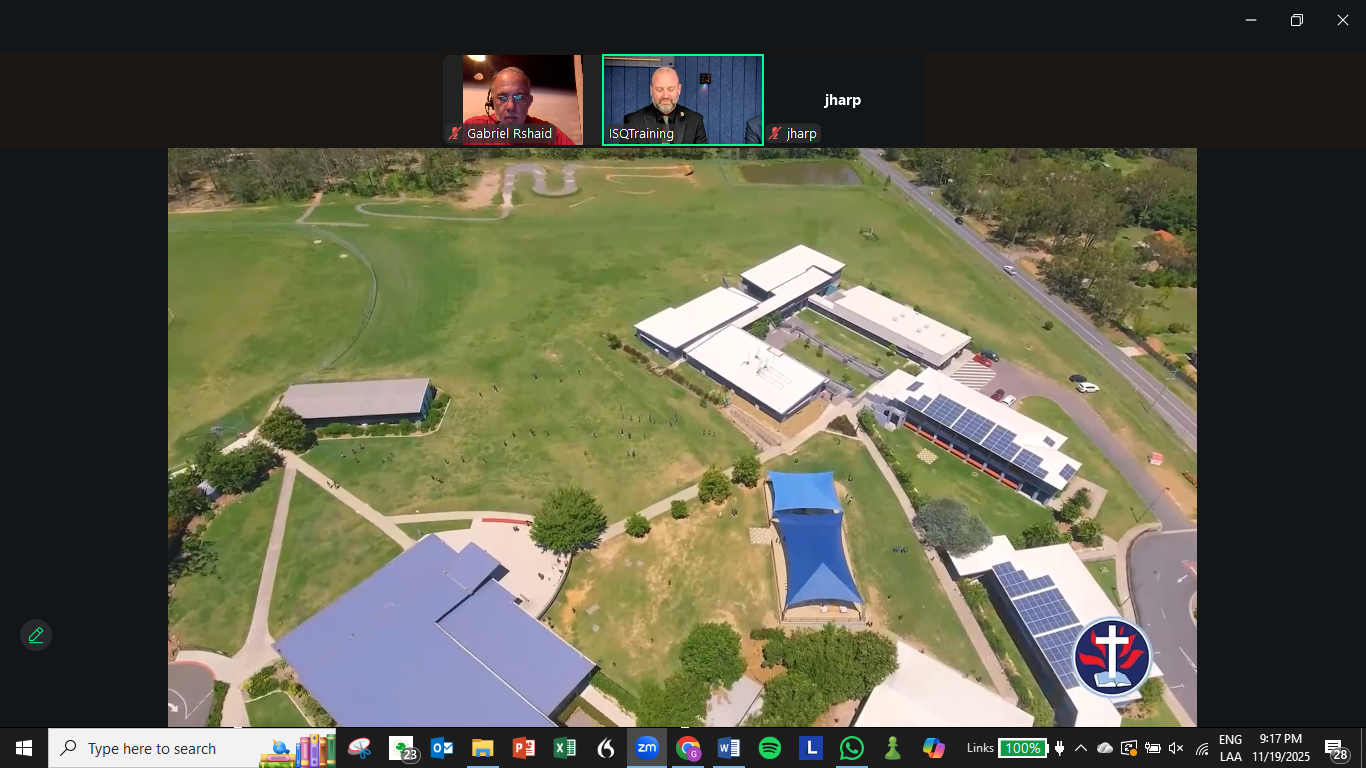
JPC has hosted international students since 1997. The Extended Day Program (EDP) sits between homestay and full boarding.
The Extended Day Routine
International (and some domestic) students stay on campus after school, get tutoring, supervised study, dinner and then take school buses home around 6pm.
“Thoughtful Eavesdropping”: By listening to student conversations, staff pick up emerging stress (exams, friendships, homesickness) and can proactively respond.
Goals & Impact
- Ensure equal access to co-curricular activities (sport, arts) even when parents/host families can’t drive students.
- Boost academic success via structured support, which reinforces belonging and wellbeing.
- Homestay families receive regular training, including child-safety updates, so the home environment is aligned with school wellbeing goals.
Cross-cutting Panel Themes
- Wellbeing must be student-driven: Reference to Judith Locke’s work on avoiding “bonsai children”—building resilience and independence, not over-protecting .
- Parents as genuine partners: Done well, parent engagement reduces conflict and stress for teachers .
- Culture and identity as core: Cultural safety is a pre-condition for learning, not a nice extra .
- Relationship first, programs second: Relationships, trust and shared “why” are what make the structures work .
“Wellbeing is not one program or one role, but a way of walking alongside students, families and communities with empathy, expertise and purpose.”
Main Entities and Initiatives
These are the main organizations and initiatives referenced in the ISQ / Queensland hour.
isq.qld.edu.au Queensland Independent Schools Parents Network (QISPN) Peak body for families; runs Mastering Parent Engagement.
parentsnetwork.qld.edu.au Radiant Life College & Gundoi Program Culture-centered wellbeing program in Far North QLD.
Facebook Page John Paul College (JPC) Home of the Extended Day Program for international students.
jpic.com.au