

New Zealand
New Zealand Segment Summary
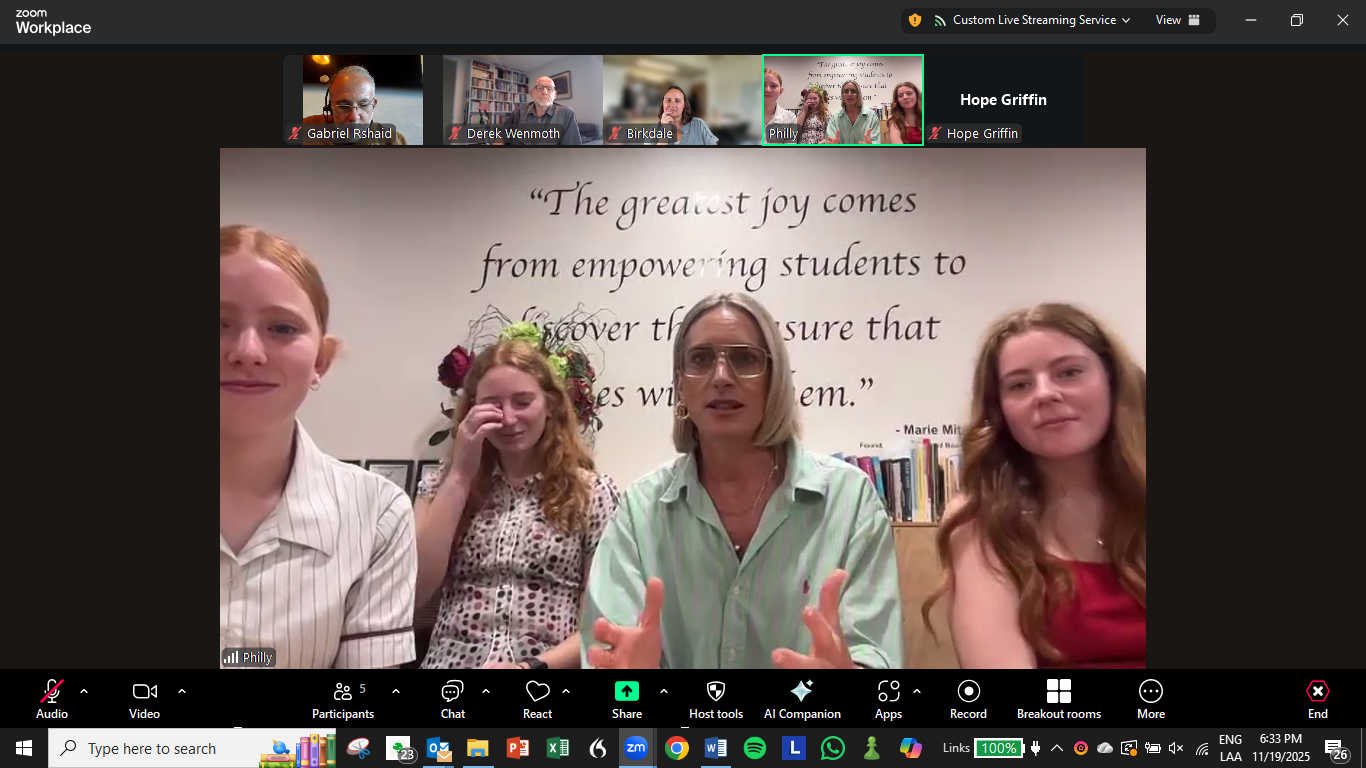
Philly (Philippa), from Albany Senior High School, explains that in Aotearoa New Zealand it is tikanga (cultural etiquette) to open formal gatherings with a karakia (blessing).
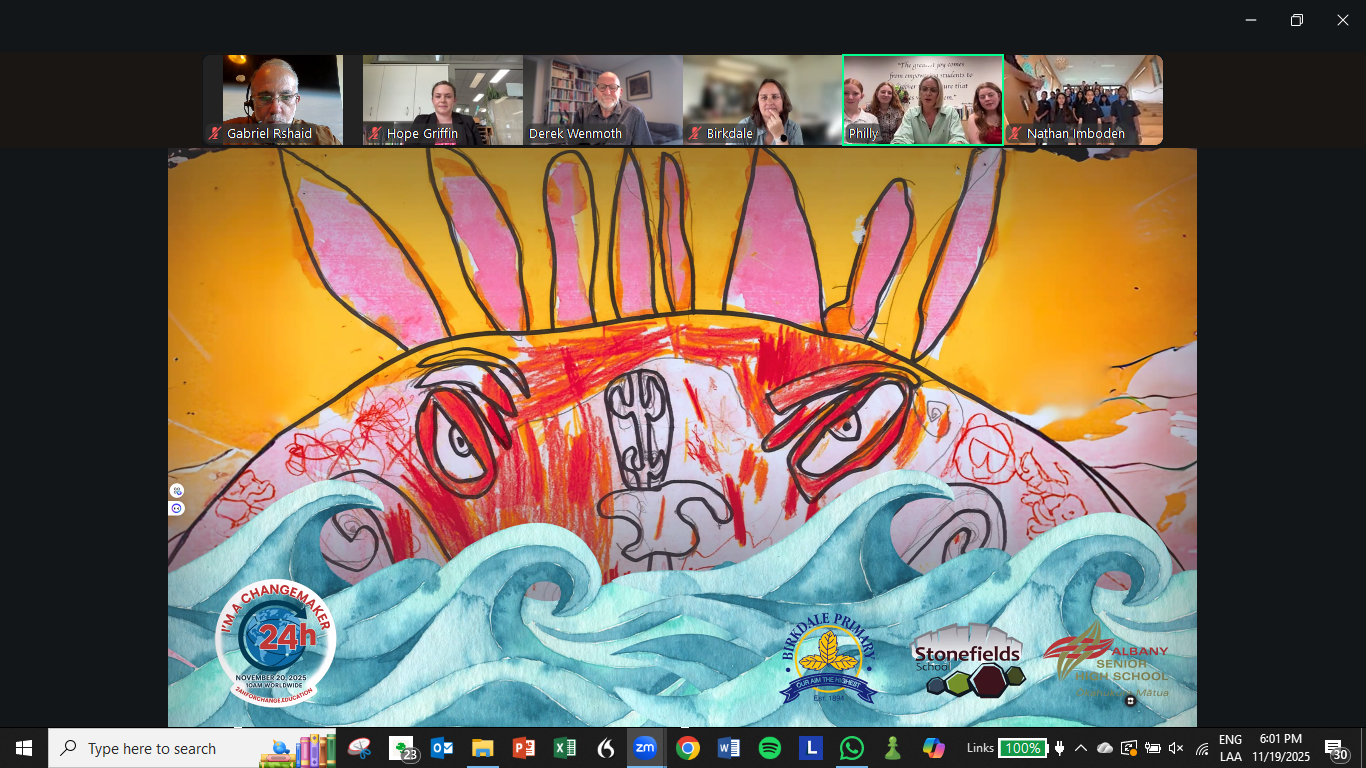
Maui and the sun – a metaphor for change in education
She reads a blessing that calls the winds from all directions, symbolically gathering diverse voices into a shared space for the conversations ahead.
Philly uses her 8-year-old son Archie’s drawing of the sun to introduce the Māui story where Māui and his brothers slow the sun so people can fully live their lives.
She links Aotearoa and Hawai‘i, noting that Māui is a central figure in both Māori and Hawaiian mythologies, symbolically connecting the first and last segments of the marathon.
The story becomes a metaphor for education: amidst relentless policy noise and system pressures, educators need to “slow the sun” to stay focused on what matters—human connection, community, and preparing young people for their futures.
Whakataukī: “Turn and face the sun and your shadows will fall behind you” — positioning this as a guiding idea for educators globally.
Stonefields School – vision, “Breakthrough” and student agency
Context
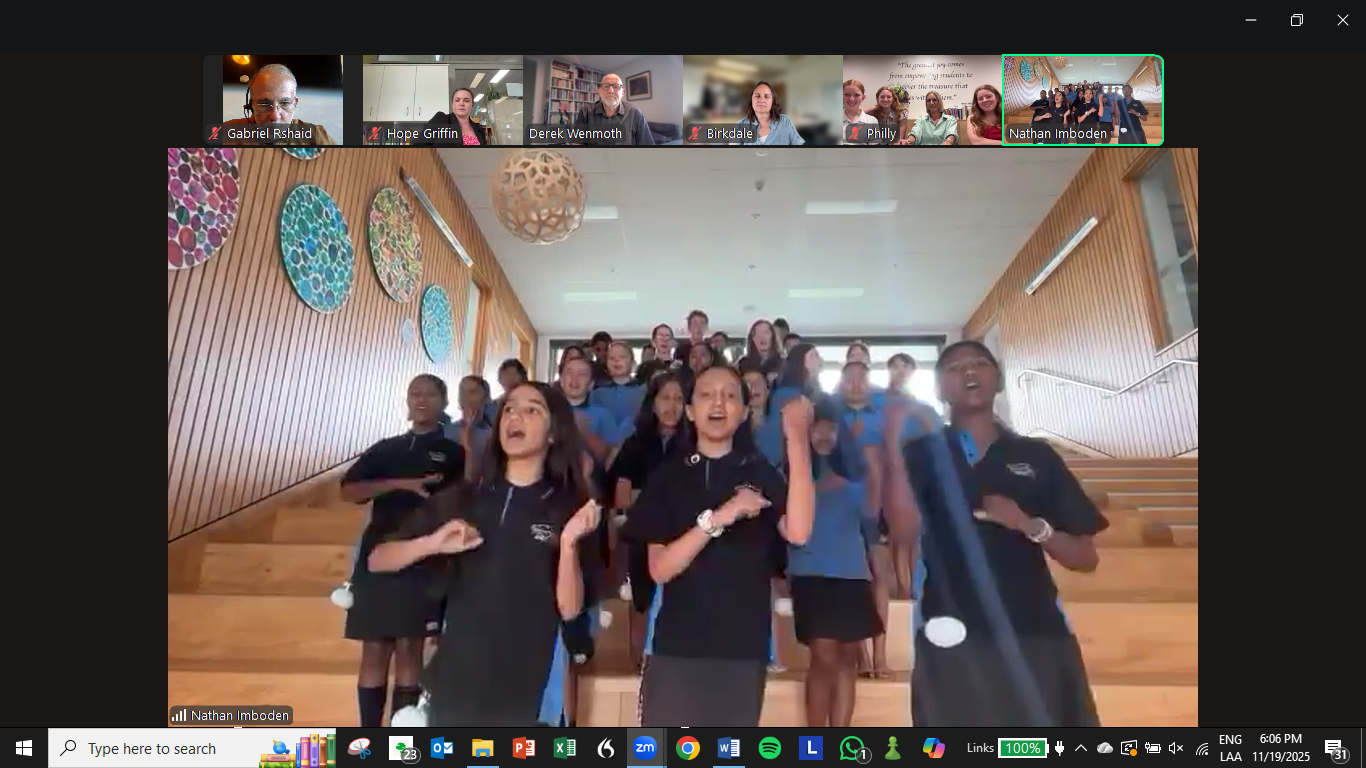
Hope Griffin, principal at Stonefields School in Tāmaki Makaurau (Auckland), opens with a performance by the school’s kapa haka rōpū (Māori performing arts group).
The Four Vision Rocks
She presents the school’s vision as its “guiding star”, structured around four “vision rocks”:
- Building learning capacity: growth mindset, identity, resilience, wellbeing.
- Collaborating: kindness, perspective taking, working towards shared outcomes.
- Making meaning: curiosity, inquiry, creativity through a clear learning process.
- Breakthrough: identifying strengths, mastering passions, and contributing to community.
Curriculum and entitlement
Stonefields has co-constructed “essence statements” and a curriculum entitlement balancing:
- Foundation knowledge and conceptual understanding.
- Capabilities: problem solving, learning dispositions, and learner agency.
The Breakthrough Challenge
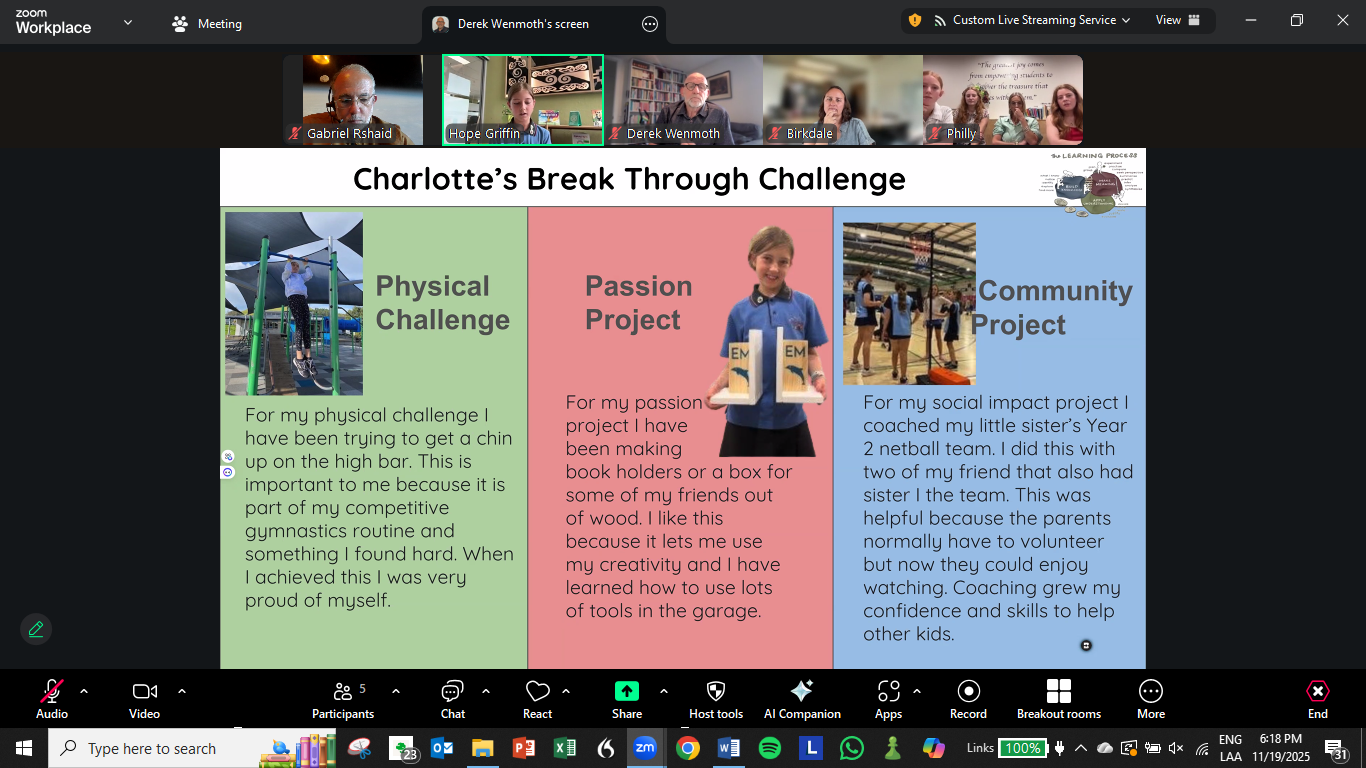
Breakthrough is a structured opportunity for learners to pursue passions, physical challenges, and social impact. The Student Council created three challenge streams:
Passion Project
Pursue an area of personal passion.
Physical Challenge
Set and meet significant fitness/physical goals.
Social Impact
Make a positive contribution to community and environment.
Student Journeys
Four students describe their Breakthrough journeys. These four students receive the first Breakthrough Challenge leadership pins at Stonefields, signalling student agency and leadership as central to the school culture.
- Passion: designed, tested, and produced a printed recipe book based on her love of cooking and baking.
- Physical challenge: 2 km continuous running and 5.5 km continuous biking, tracking distance and times.
- Social impact: gardening and tree mulching at school with her mother (the school gardener) and participating in a council-run native planting day with her family.
- Physical challenge: achieve 70 continuous skips, practising before/after school and on weekends.
- Social impact: created a times-tables card game to help younger learners.
- Passion project: designed and built a moon-shaped shelf.
She emphasises determination, collaboration, and persistence in the “learning pit”.
- Completed all three challenge areas and strongly used Stonefields’ learner qualities (especially reflection and determination).
She describes moving through the school’s learning process (build knowledge → make meaning → apply understanding), and says Breakthrough has grown her agency, resilience, and confidence in giving back.
- Physical project: filmed and explained drills to build footwork and endurance.
- Passion project: transitioned from recorder to clarinet and joined an orchestra trip to play with the Auckland Philharmonia.
- Community project: led a Filipino parol (lantern) workshop for younger learners, sharing his culture.
He stresses agency, determination, leadership, and perspective-taking, highlighting that understanding others’ perspectives “can literally change the world.”
Birkdale Primary School – community-led vision and bicultural identity
Context & history
Principal Natasha (Birkdale Primary School) describes a diverse community with a long history:
- School established in 1894 after local strawberry-growing families persisted despite earlier refusals.
- In the 1980s, the community created the first—and still only—full immersion Te Reo Māori language unit in that part of Auckland, as part of the language revitalisation movement.
The Challenge
When she arrived, the school was fragmented: the English-medium pathway and the full immersion Māori pathway were largely operating as separate worlds.
Her leadership challenge: unite and repair without diluting or marginalising either pathway.
Community engagement and “power-sharing”
They ran extensive community engagement. Targeted different groups; met parents at the school gates, phoned families, held meetings, and ran focus groups with students.
Key questions for parents and staff:
- What are your aspirations for your children?
- What knowledge, skills, and dispositions are non-negotiable?
Similar questions were posed to students: what helps them learn; what they value.
Crucially, they shared the sensemaking: Instead of analysing data behind closed doors, a representative group (parents, teachers, board members, leaders) met for a “sort and synthesise” day.
They found parents made some unconventional but powerful connections that educators alone might not have seen.
Natasha emphasises: “the people who sort the data control the narrative” —so they deliberately shared that power.
Outcome: a shared graduate profile
The community co-constructed a single graduate profile for Birkdale that:
- Is authentic to both pathways (English-medium and immersion).
- Reflects bicultural Aotearoa and the school’s Māori and English identities.
- Unites the school without erasing difference, and focuses on dispositions and capabilities for all learners.
Albany Senior High School – relational, futures-focused secondary
School identity and structure
Albany Senior High School (ASHS) is a years 11–13 school with a very diverse student body; over 50% of students choose to attend from outside the local zone. A strong emphasis on relationships, student voice, and being future-focused.
The school is driven by vision and mantras like nurture each other, inspire each other, empower each other.
Structures that make it “look and feel different”
(longer than typical 45–90 minute periods) to allow deeper learning.
Mid-week (impact projects) where students work on sustained, authentic projects.
A 100-minute pastoral/home-room class where tutors act as learning coaches, supporting executive function, goal-setting, and personalised academic pathways.
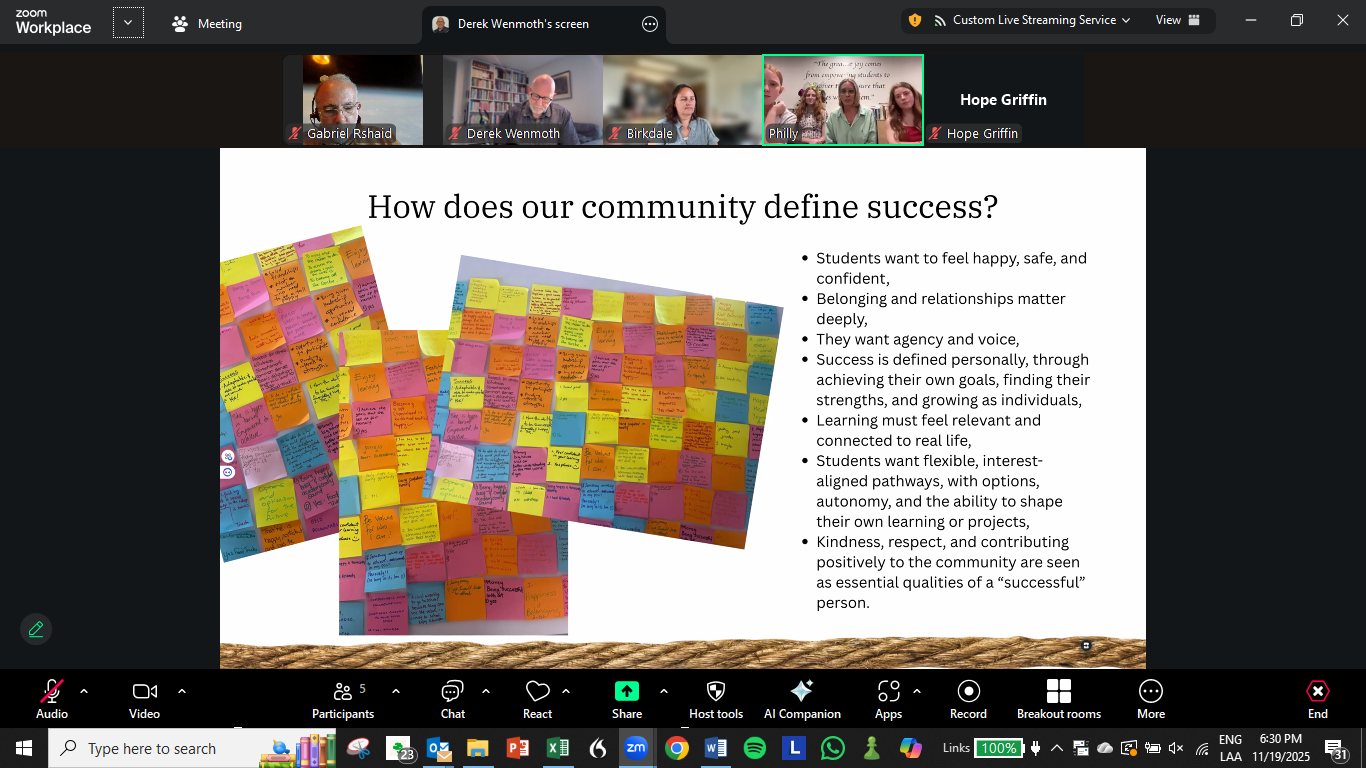
Community views on success
For incoming Year 11 families, ASHS asked on post-its: “What does success look like at the end of the year for your young person?” (And, more light-heartedly, whether they wanted a food-truck event—unanimous yes).
Parents did not primarily define success in narrow academic terms. They emphasised:
- Happiness, safety, and confidence.
- Belonging, agency, and personal voice.
- Relevant learning connected to life beyond school.
- Kindness, respect, and positive contribution to community.
This aligns strongly with the school’s relational and learner-centred identity.
Flattening hierarchy: first-name culture
Teachers are addressed by first names (e.g. “Philly”), which initially felt strange but quickly led to more genuine, human relationships. Philly notes that despite flattening the hierarchy, they maintain high academic expectations —e.g. revisiting a student’s goals mid-year and raising targets from “merit” to “excellence” level when they see the student can go further.
Student perspectives
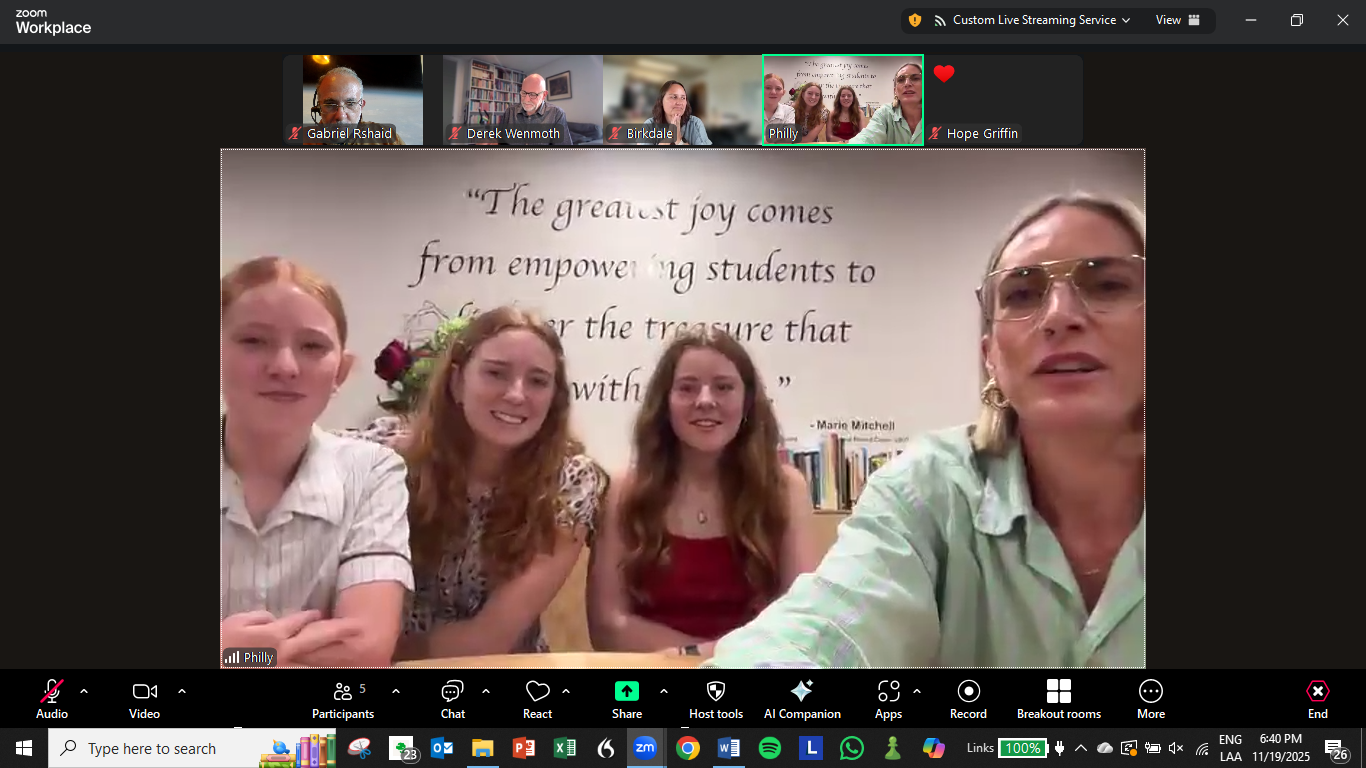
Three students share how ASHS shaped them:
Global connectivity & Link Online Learners
2020 graduate whose final year was disrupted by COVID-19. Introduced to Link Online Learners (LOL) by principal Claire Amos – a global youth network where young people aged 10–18 meet regularly online and co-create projects and a podcast called This Global Life.
Her ASHS “impact project” involved editing podcast episodes in GarageBand and collaborating with a friend in Canada who published them.
She later spoke at the Forum of World Education annual conference near Bangkok, representing youth voice and global connection. Having just completed her tertiary studies, she is considering working on a new project called YESfest, helping recreate that “breakfast club” global learning experience for other young people.
Leadership, work experience, and networks
Recent graduate who highlights the importance of first-name relationships and feeling respected. Learning agency and “navigating the learning pit” as part of her development.
Through programmes like Gateway, she gained experience in a local primary school, exploring education as a career.
She also participated in the Youth Emerging Leadership Programme of the Blues Charitable Trust, which gave her leadership skills and networks she expects to use in future work.
Future student perspective
Younger sibling looking forward to starting at ASHS in 2026. Excited about:
- No uniform (mufti), allowing her to express her identity through clothing.
- Longer learning blocks that give time to settle, focus, and produce work she’s proud of.
- Sports opportunities (basketball, netball, volleyball) as a way to meet people across year levels.
Philly closes by emphasising how powerful it is for teachers to be “seen as full people” by students and vice versa, and how relationships plus high expectations create a compelling culture that even keeps staff from wanting to leave.
Final reflections and the EdRising themes
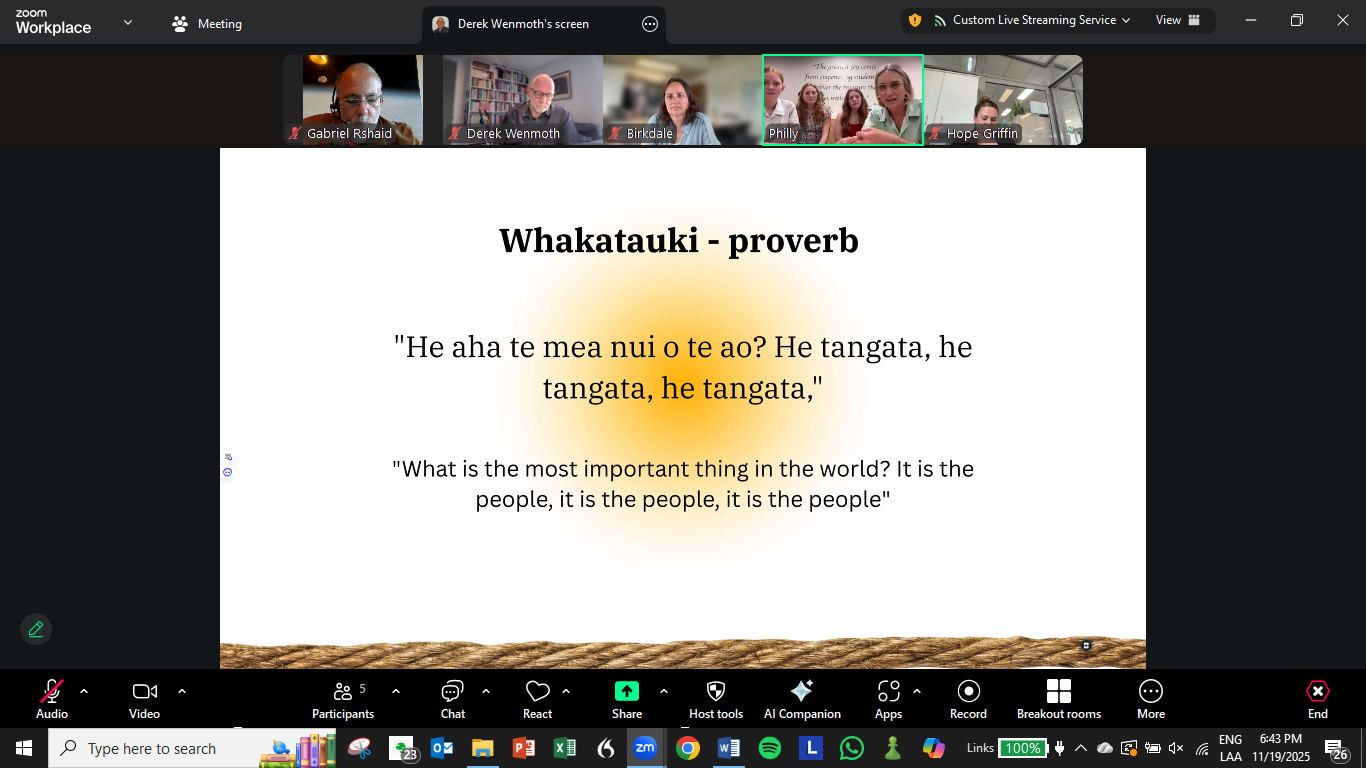
“He aha te mea nui o te ao? He tāngata, he tāngata, he tāngata.”
(What is the most important thing in the world? It is the people, the people, the people.)
Derek then synthesises themes from the three schools:
- Clarity of purpose – vision, mission, and graduate profiles co-created with communities instead of imposed on them.
- Student agency – students not just as targets of teaching but as active co-designers of their learning.
- Community co-ownership – parents, whānau, and local communities engaged in defining success and purpose.
- Rethinking structures – timetables, roles, and uses of technology reshaped to match values and goals.
- Digital and global connections – online platforms allowing learners to connect globally and build hope and opportunity.
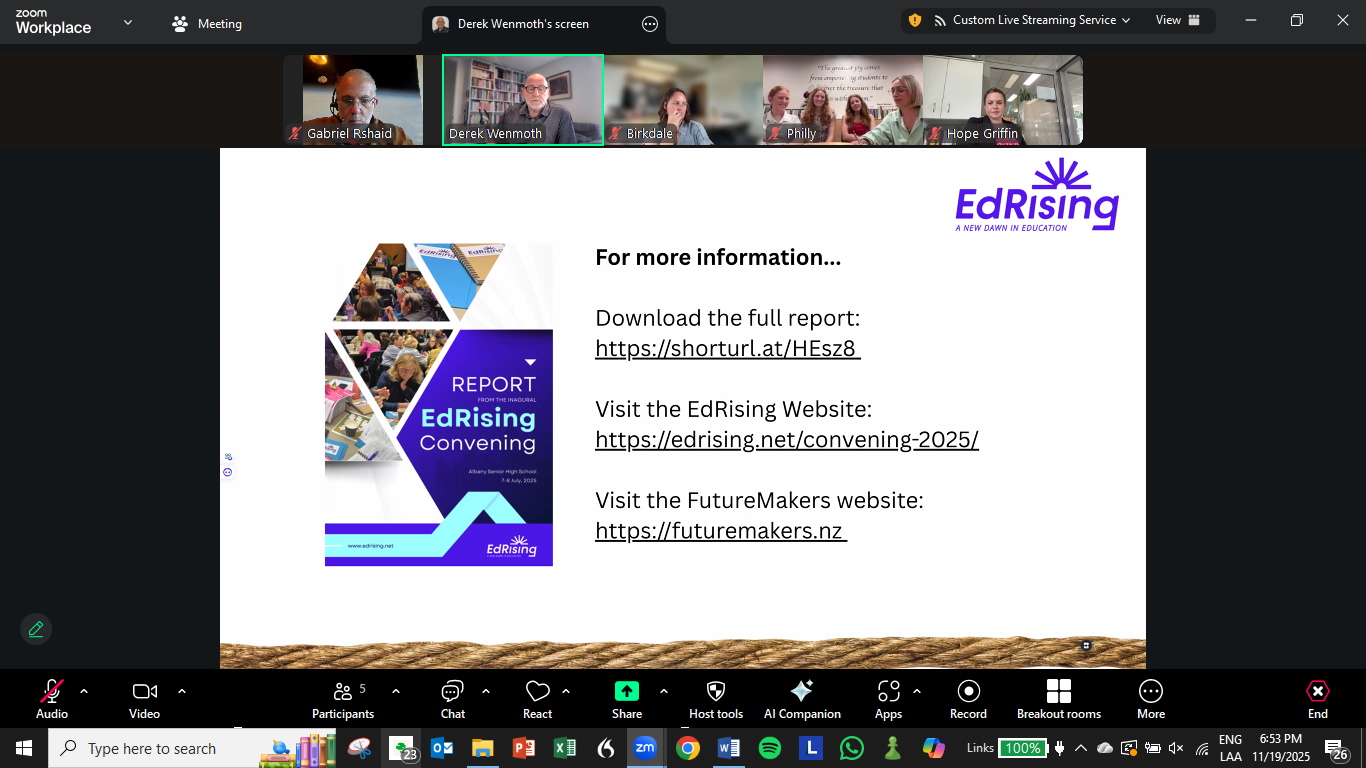
He connects this to EdRising, a New Zealand initiative and event, where educators recently explored five themes:
Entities mentioned and URLs
Below are the main named entities (schools, organisations, programmes, and events) referenced in the segment.
2.1. Schools
stonefields.school.nz Birkdale Primary School Diverse primary school on Auckland’s North Shore.
birkdaleprimary.school.nz Albany Senior High School Years 11–13 secondary school in Auckland.
ashs.school.nz
2.2. Programmes and initiatives
2.3. Cultural and arts organisations
Auckland Philharmonia Orchestra Professional orchestra.apo.co.nz