

Singapore
Singapore Segment Summary
Hosted by Principals’ Academy (Singapore), this hour showcased three complementary lenses on the future of learning: Inclusion, Brain-based Learning, and Future-ready Curriculum.
Principals’ Academy Singapore – Framing and Role
Host: Joseph Loy, Principals’ Academy.
Principals’ Academy positions itself as a professional learning hub that connects research, policy, and school practice. They effectively act as a bridge between Singapore’s system-level expertise and international audiences.
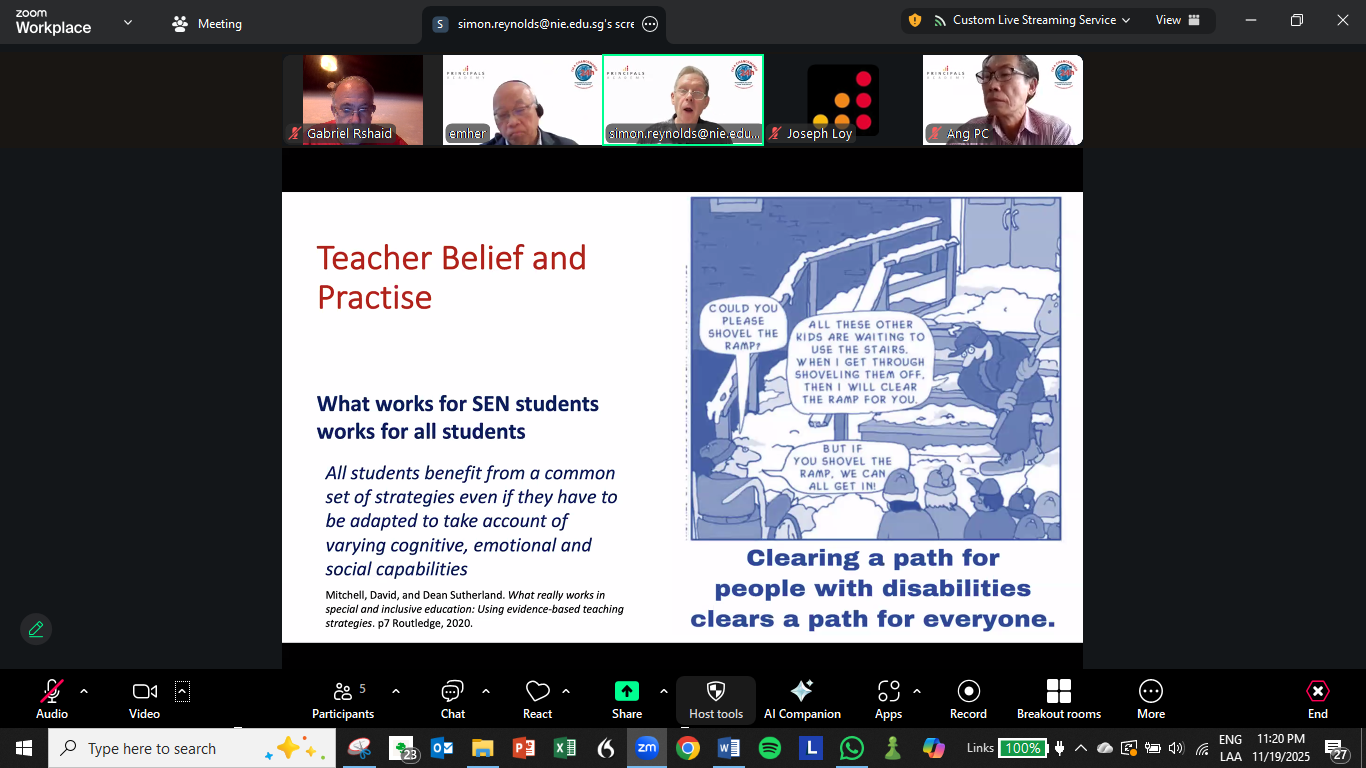
Simon Reynolds – Inclusive Education & SEN
Talk: Supporting learners with special educational needs towards an inclusive future.
Core Framing
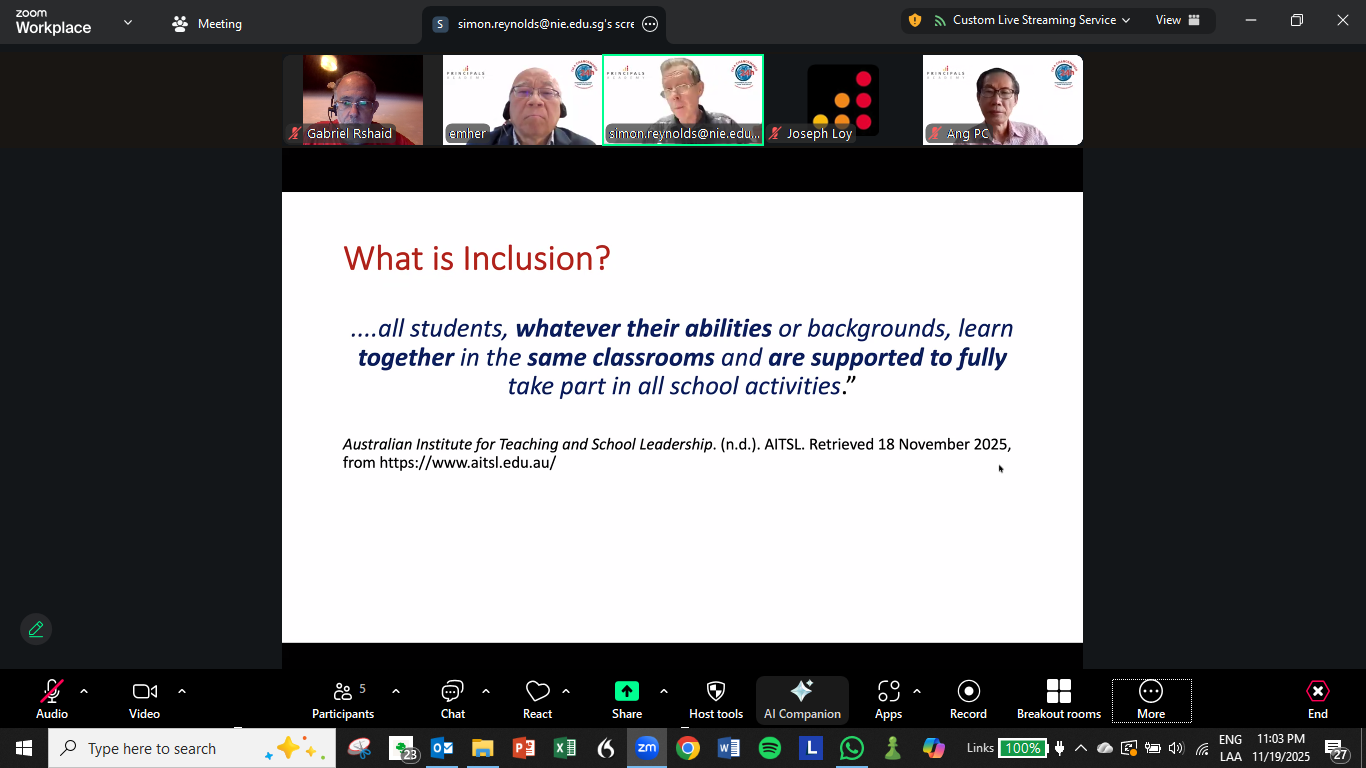
Inclusion means all students, regardless of ability, learning together in the same classrooms. Reynolds focuses on three common SEN profiles:
- Dyslexia (approx. 5–10%)
- ADHD/ADD (approx. 8–12%)
- Autism (often underestimated in parts of Asia)
Key Strategies
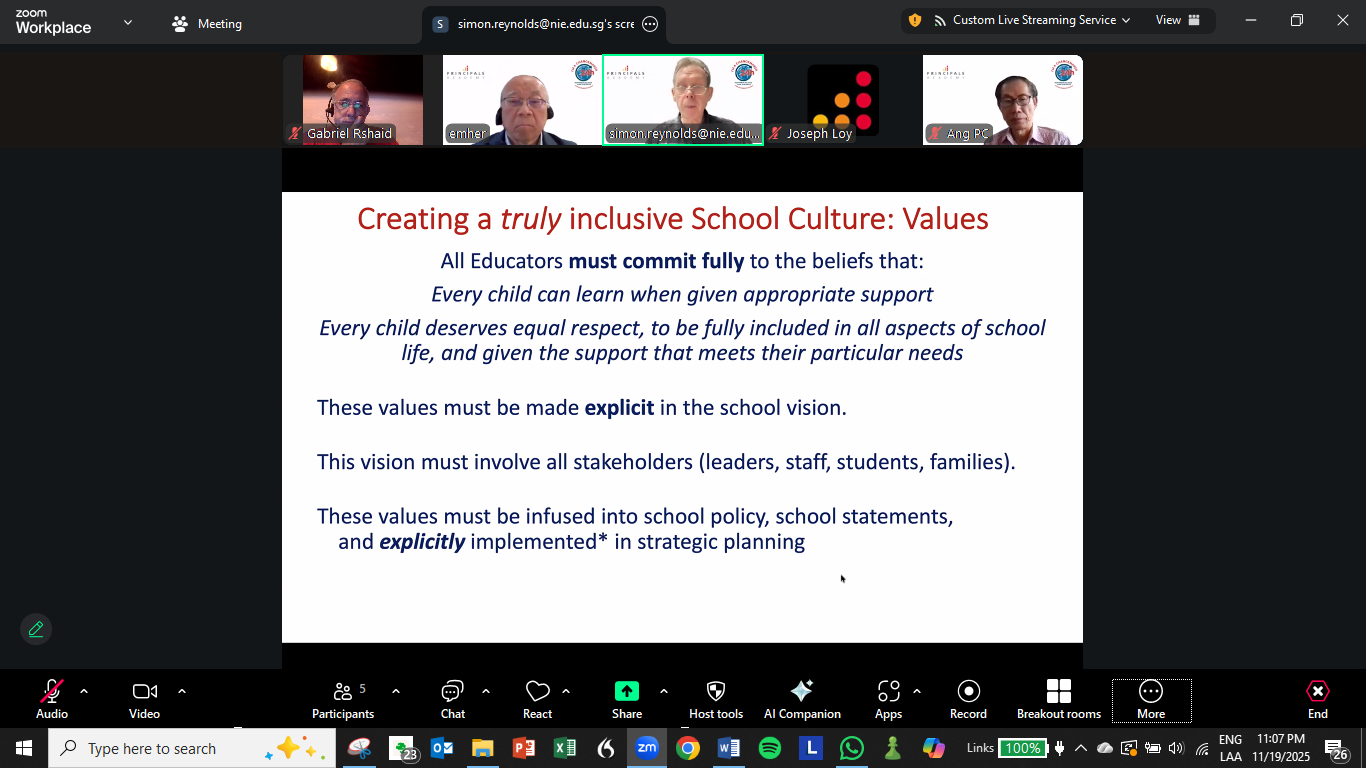
- Values: Must be explicit in vision/policy and shared by leaders, staff, and families.
- PBIS: Use Positive Behaviour Interventions and Supports to create a safe environment.
- MTSS (Multi-Tiered System of Support): From high-quality core pedagogy (Tier 1) to intensive individualised support (Tier 3).
Teacher Beliefs & Training
Help teachers move from “won’t do” to “can’t do (yet)”. Reynolds advocates for experiential training (so teachers “feel” what dyslexia/ADHD is like) and using Behaviour Skills Training (BST): describe → model → rehearse → feedback.
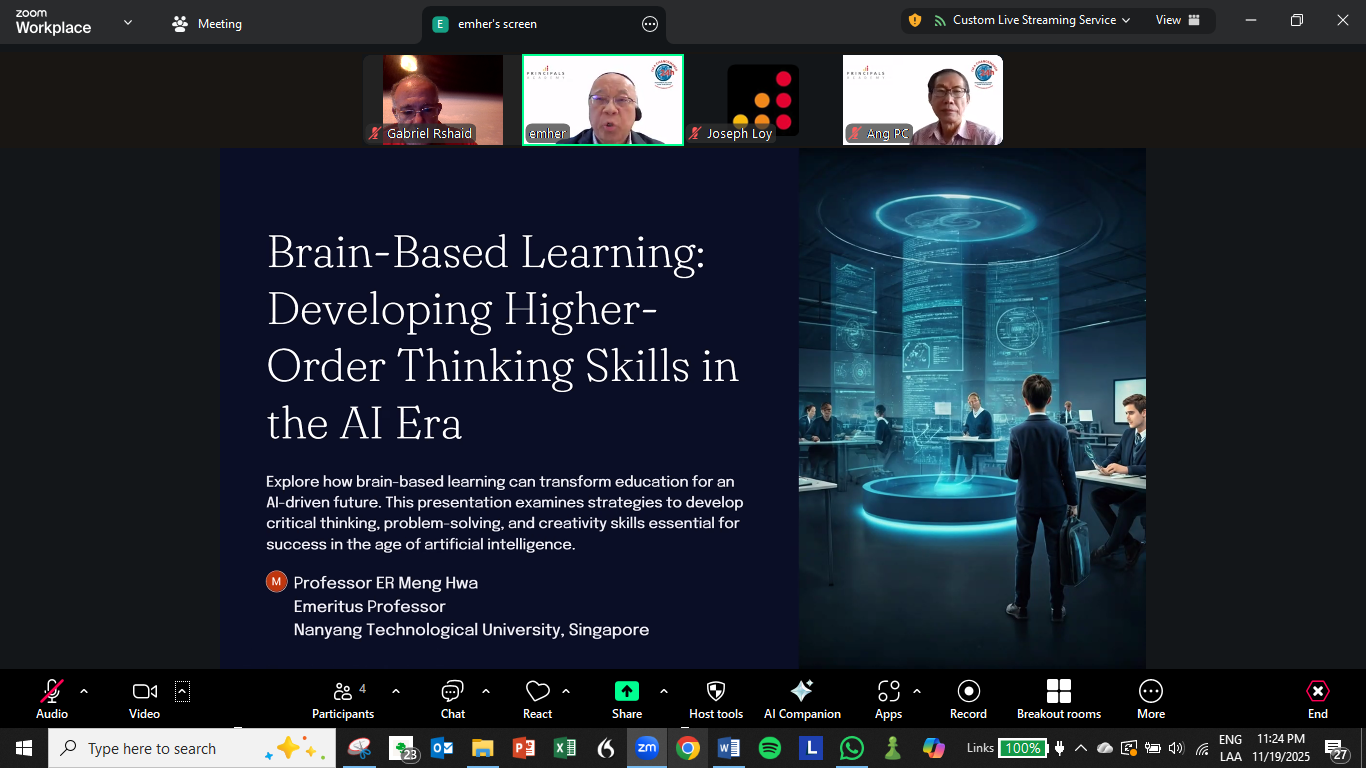
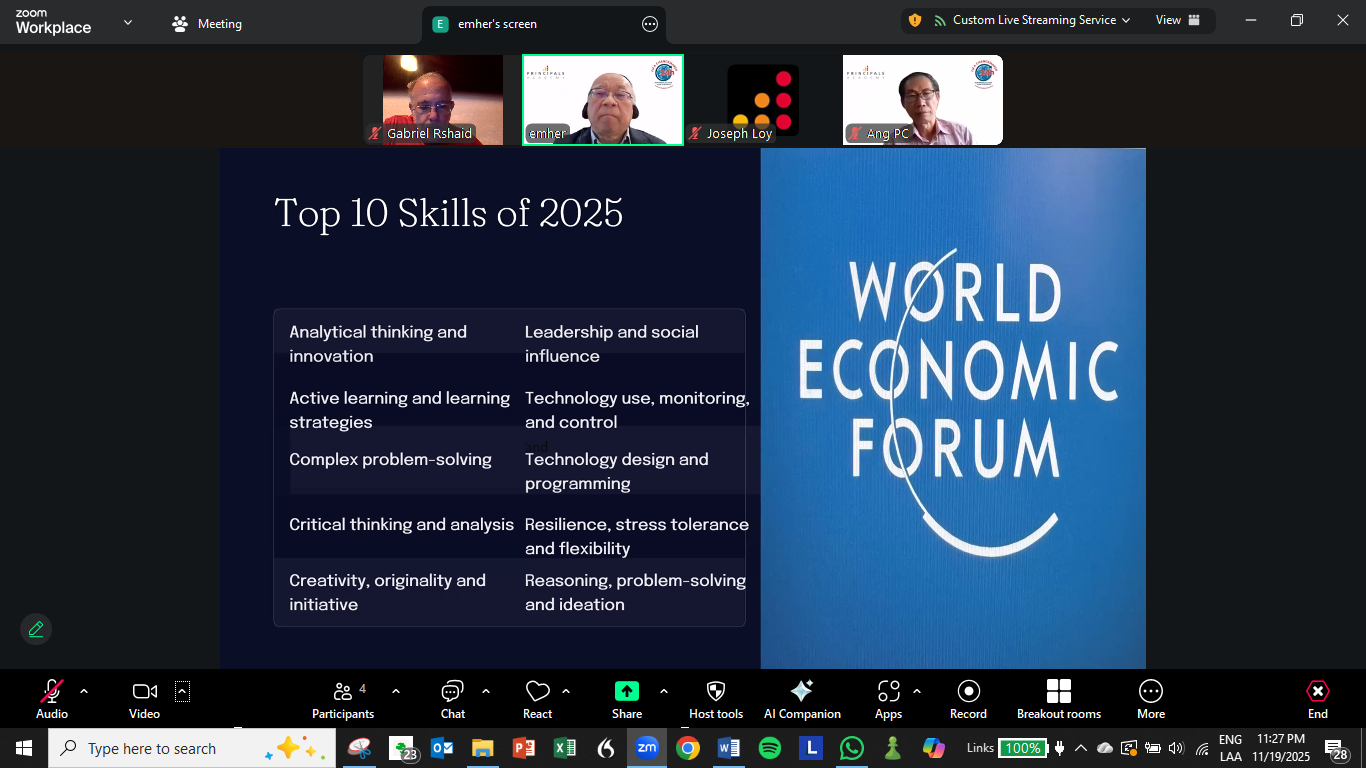
Prof. Er Meng Hwa – Brain-based Learning & Higher-Order Thinking
Big Idea: AI is not just a tool; it’s a new cognitive infrastructure. To stay relevant, humans must excel at what AI is weakest at: higher-order thinking (HOTS).
Why HOTS Matters Now
Prof. Er uses Bloom’s taxonomy. While AI automates the lower levels (Remember/Understand), humans need to live in the higher levels:
- Analyse
- Evaluate
- Create
HOTS includes deep domain understanding, processing skills, and a reflective disposition (the “power of pause” to resist automation bias).
Evolution of Pedagogy
- Direct Instruction: (Industrial age) Teacher as expert, students as passive receivers.
- Project/Problem-Based: Teacher as facilitator, students as active explorers.
- Guided Experience Approach: Teacher as coach/co-learner; students tackle complex, real-world tasks. This fully engages analyse–evaluate–create.
Practical Strategies
Great teaching condenses into relaxed alertness (safe but challenging), immersion in complex experience, and active processing. He suggests Inquiry-based learning, Flipped classrooms, and peer discussion to implement these principles.
Mr Ang Pow Chew – Designing Future-Ready Curriculum
Talk: Designing future-ready curriculum: alignment, technology and inclusion.
The central diagnosis is that the hardest problem in education is alignment: making curriculum intent, pedagogy, and assessment all speak the same language—the language of skills and real-world competence.
1. Aligning Intent (The 4Cs)
Rewrite outcomes from “Students will know…” to “Students will be able to…”. Prioritise:
- Critical Thinking
- Communication
- Collaboration
- Creativity
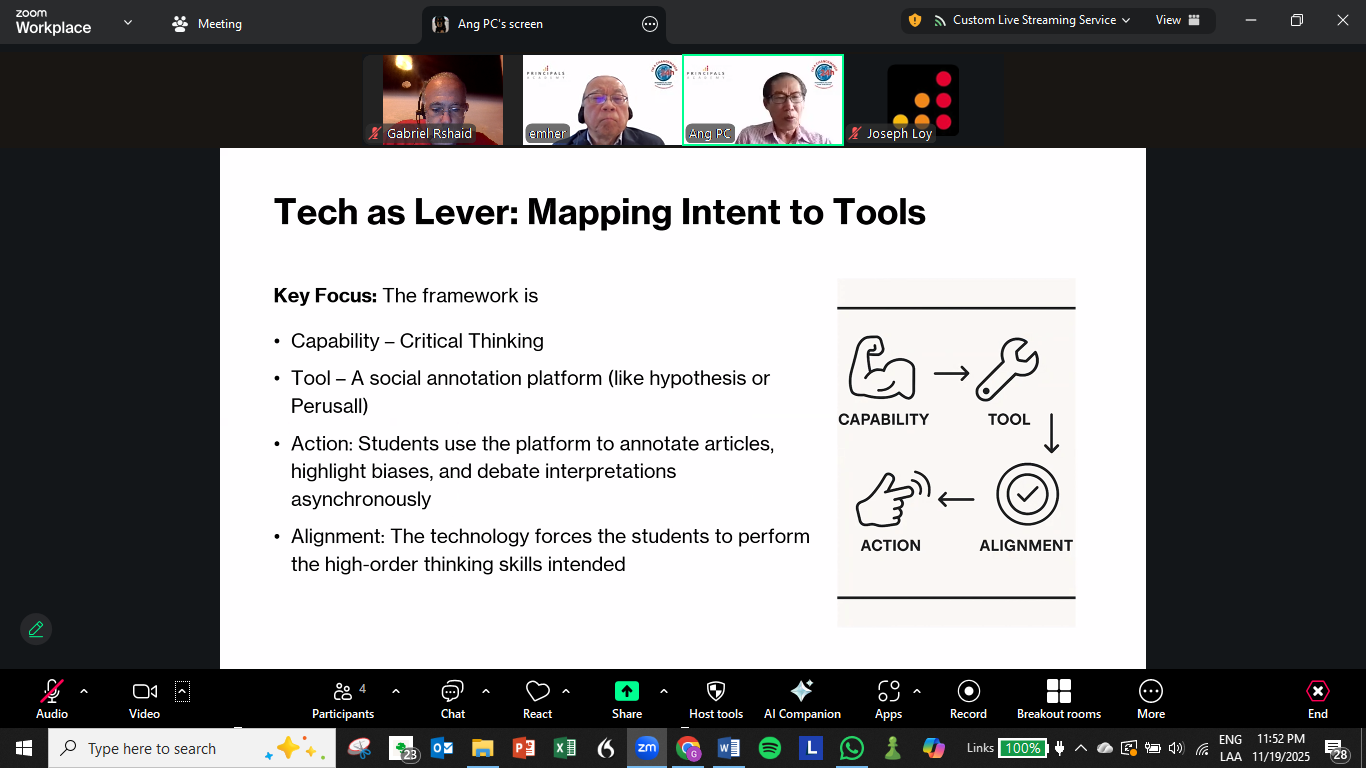
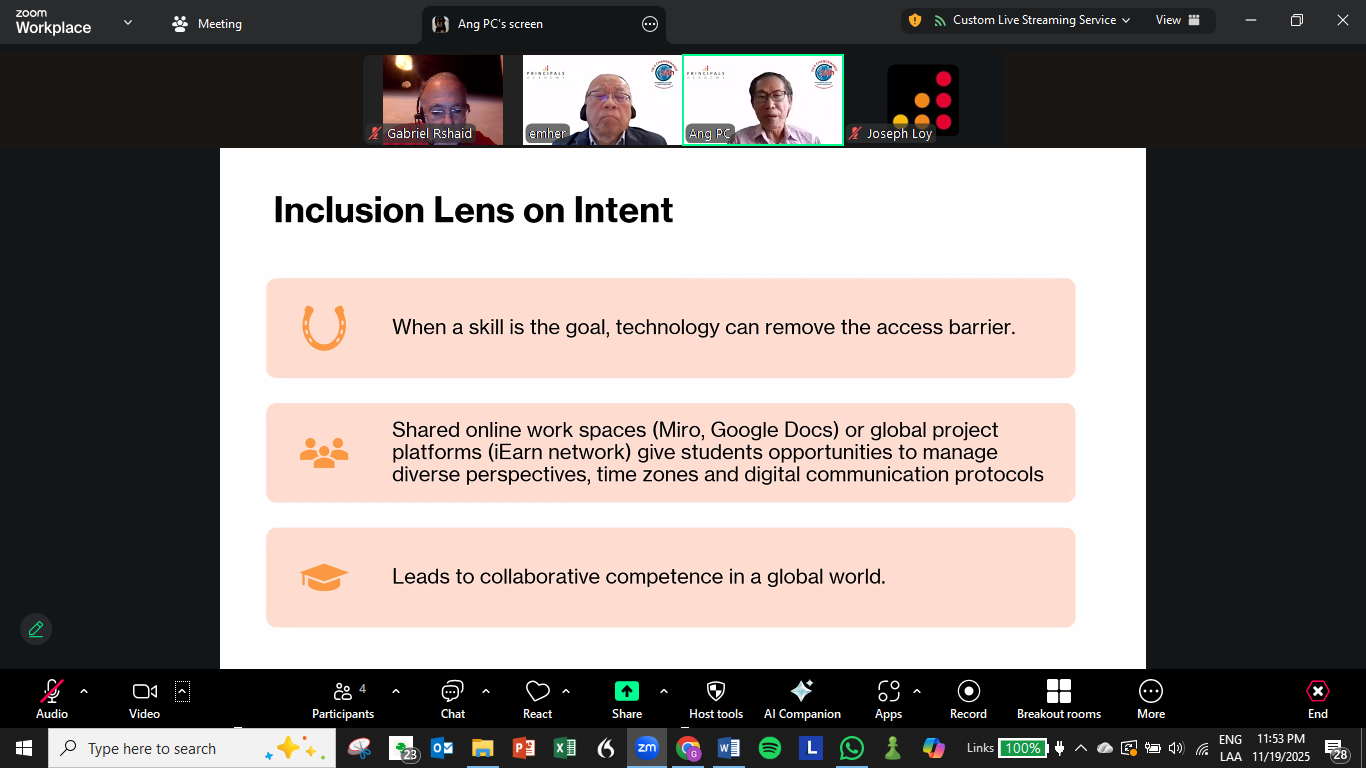
2. Technology as Lever
Technology is not the intent; it is the lever. Examples:
- Social Annotation: (e.g., Hypothesis, Perusall) trains metacognition.
- Virtual Field Trips: Widen global perspectives.
- Adaptive Platforms: Automate routine practice to enable real personalisation.
Reimagining Assessment
Move from assessment of learning (high-stakes, stress) to assessment for learning (iterative, feedback-rich). He emphasises authenticity (real-world tasks) and choice (digital portfolios, podcasts, performances).
Main Entities and References
Below are the main organizations and tools referenced in the Singapore segment.
www.principals.academy/ Singapore Ministry of Education (MOE) Context for curriculum and SEN work.
moe.gov.sg National Institute of Education (NIE) Teacher training institute in Singapore.
nie.edu.sg Nanyang Technological University (NTU) Leading research university; Prof. Er’s institution.
ntu.edu.sg